Press release, supplied by Fraunhofer LBF and dated 1 October 2026. We have summarised it and added what the institute told us about availability. The claims are Fraunhofer's own and have not been tested by The Furniture Magazine.
In brief
- Researchers at the Fraunhofer Institute for Structural Durability and System Reliability LBF in Darmstadt have developed a flexible polyurethane foam made from bio-based polyols and bio-based isocyanates.
- Fraunhofer says the foam is over 90 percent bio-based and showed hardly any discoloration after 700 hours of UV exposure.
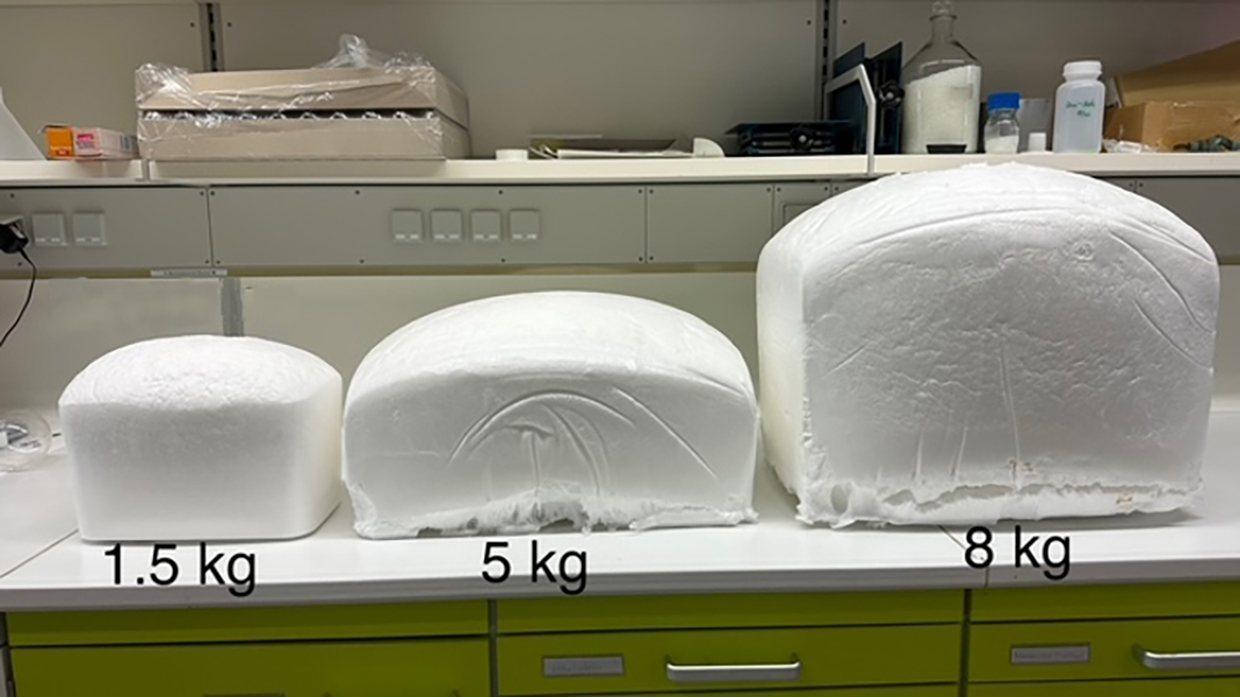
- It exists at laboratory scale only, in blocks of up to eight kilograms. The institute is looking for foaming companies to scale the process up and upholstery manufacturers to test the foam.
Most cushioning for upholstery, mattresses and vehicle seats is petroleum-based polyurethane foam. In a project called OrganoFoam, Fraunhofer LBF has developed polyurethane foams made primarily from bio-based raw materials, designed to be processed on existing industrial equipment. The work was done with Friedrich Platt GmbH, which evaluated and processed the foam, and was funded by the German Federal Ministry of Research, Technology and Space.
“We produce the bio-based PU foams in blocks in the laboratory. The foam blocks can vary in size, color and shape. Our project partner then cuts them to form products such as seat and back cushions for sofas.”
— Roland Klein, research scientist, Fraunhofer LBF
What it is made of
The foam is made from bio-based polyols and bio-based isocyanates, components that the release says are normally used to make coatings and are not usually suitable for flexible foams. Fraunhofer says a specially tailored formulation, which it is having patented, makes it work, and that the foam needs no natural fibres as a supporting structure.
“They are over 90 percent bio-based and contain only a few additives.”
— Roland Klein
The material is foamed into blocks weighing up to eight kilograms. After demoulding it is mechanically crushed to open the cell structure, which the release says keeps it dimensionally stable.
What the tests showed
Free, every fortnight
Get the next issue in your inbox
Technique, finished work, trade news and live jobs, for the bench and the studio.
Free, every fortnight. One click unsubscribes. See our privacy policy.
The blocks were used to build a demonstration sofa. In weathering tests under UV lamps, the release says the foam yellowed much more slowly than conventional upholstery foams.
“Conventional foams had already turned yellow and brittle after 100 hours, while our OrganoFoam shows hardly any discoloration even after 700 hours of UV exposure.”
— Roland Klein
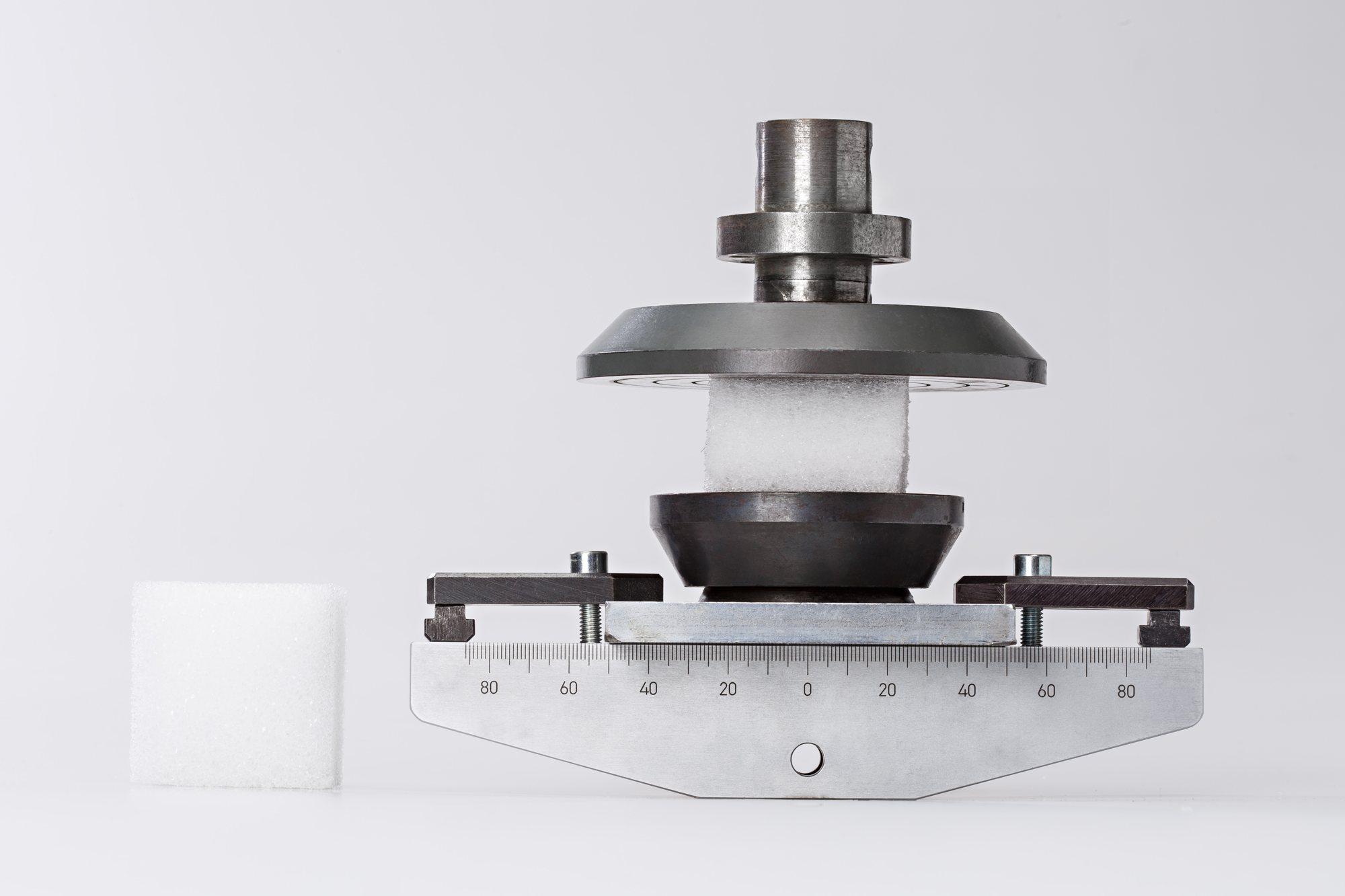
Fraunhofer says compression hardness and compression set tests showed the foam can compete with the fossil-based reference foam. Tests at Friedrich Platt found that the blocks could be cut on existing industrial equipment, bonded into larger sections and covered with standard upholstery fabrics.

Can a UK workshop buy it?
Not yet. Dr Roland Klein, who heads the Additives and Polymer Design department at Fraunhofer LBF, told The Furniture Magazine that the foam has been developed at laboratory scale, up to eight kilograms a batch, and that as a research institute Fraunhofer LBF does not produce it. Friedrich Platt is a foam converter, not a foam maker. Dr Klein said it is foreseen that the foams can later be bought from Friedrich Platt.
Fraunhofer LBF is looking for foaming companies interested in scaling up the process, and for end users such as upholstery manufacturers to test the material in their products. UK firms who are interested can contact Dr Klein at roland.klein@lbf.fraunhofer.de.
Read the press release at Fraunhofer LBF
Sources
- Fraunhofer LBF, press release, Sustainable Comfort, 1 October 2026
- Dr Roland Klein, Fraunhofer LBF, emails to The Furniture Magazine, 9 and 12 November 2026
Press images © Fraunhofer LBF, used with permission. This item is editorial and was not paid for.
Know someone in the trade who should read this?
Send it to them. The magazine is free, and it grows one colleague at a time.
The Furniture Magazine
Every issue, free in your inbox
Technique, tools and materials, finished work worth studying, trade news and jobs — free to the bench and the studio.
Free, every fortnight. One click unsubscribes. See our privacy policy.