What does an employer look for when a new upholsterer walks in? We put six questions to a workshop that hires. Jim Athey, Managing Director of George Smith, maker of traditional upholstered furniture, answers here.
What can a graduate from a one-year course usually do on arrival, and what can they not?
After a year, I would hope they have a sound grounding across the main skills: springing, filling and applying fabric. What they usually need next is experience across a wider range of pieces, including more technical work such as deep buttoning, ruching and handling difficult fabrics and shapes. Developing a problem-solving mindset is particularly important in a business like ours, where so much of what we produce is bespoke. It is not just about mastering individual techniques, but learning how to adapt them to the demands of each piece.
What is the first job you give a new starter, and what tells you within a week whether they will make it?
We usually start with webbing up, stitching and lashing cone springs. At this stage, you are looking for confident tool handling, attention to detail and a willingness to listen and learn. Applying base cloth is another useful starting point, as it helps develop fabric-handling skills. I am also far less concerned about someone making a mistake with a couple of yards of base cloth than with an expensive mohair velvet. Neatness matters from the outset: keeping the work tidy at every stage gives you the best chance of achieving an excellent finish. You cannot judge someone's entire potential in a week, but you can certainly get a sense of their attitude, how they respond to guidance and whether they are making progress.
Speed or finish: which matters more in the first six months?
Both are important, but in the first six months, quality has to come first. Speed should develop naturally as skills and confidence improve. We break the work down into individual tasks, allowing someone to become proficient at, for example, webbing up before focusing on doing it more quickly and then progressing to the next skill. It is a structured approach that builds confidence, consistency and productivity without compromising the standards we expect.
What makes one applicant stand out from ten with the same certificate?
Free, every fortnight
Get the next issue in your inbox
Technique, finished work, trade news and live jobs, for the bench and the studio.
Subscribe freeThe practical skills test is often what makes the difference. There is no substitute for watching someone work. A certificate demonstrates that they have completed their training, but it does not necessarily tell you how they will perform at the bench. I am equally interested in their attitude and willingness to learn. Do they listen carefully, take advice on board and engage positively with the team? Whatever your level of experience, there is always something more to learn. Someone who is receptive to guidance and genuinely wants to improve will always stand out.
What would you tell a 17-year-old deciding between this and university?
Think carefully about what you want from either route. University is a significant investment of money and, more importantly, time, so consider what the course will lead to and whether it is the right way to pursue your interests. Upholstery is a great trade in the right workplace. You have the satisfaction of making something that people will enjoy for years, alongside experienced colleagues who can help you develop. It offers practical, creative work and the opportunity to build a steady career. I would be very happy to see my own son or daughter choose it.
Is there anything you wish every training school taught, and does not?
I would like to see greater emphasis on traditional upholstery methods: not simply how to carry them out, but why they are used and the role they play in comfort, durability and repairability. Understanding the reasoning behind a technique is just as important as being able to execute it well. That knowledge allows upholsterers to make better decisions, adapt their skills and appreciate the craftsmanship involved. These are valuable skills that deserve to be preserved and passed on. The more people who understand and practise them, the stronger the future of the trade will be.
Answers from Jim Athey, Managing Director, George Smith.
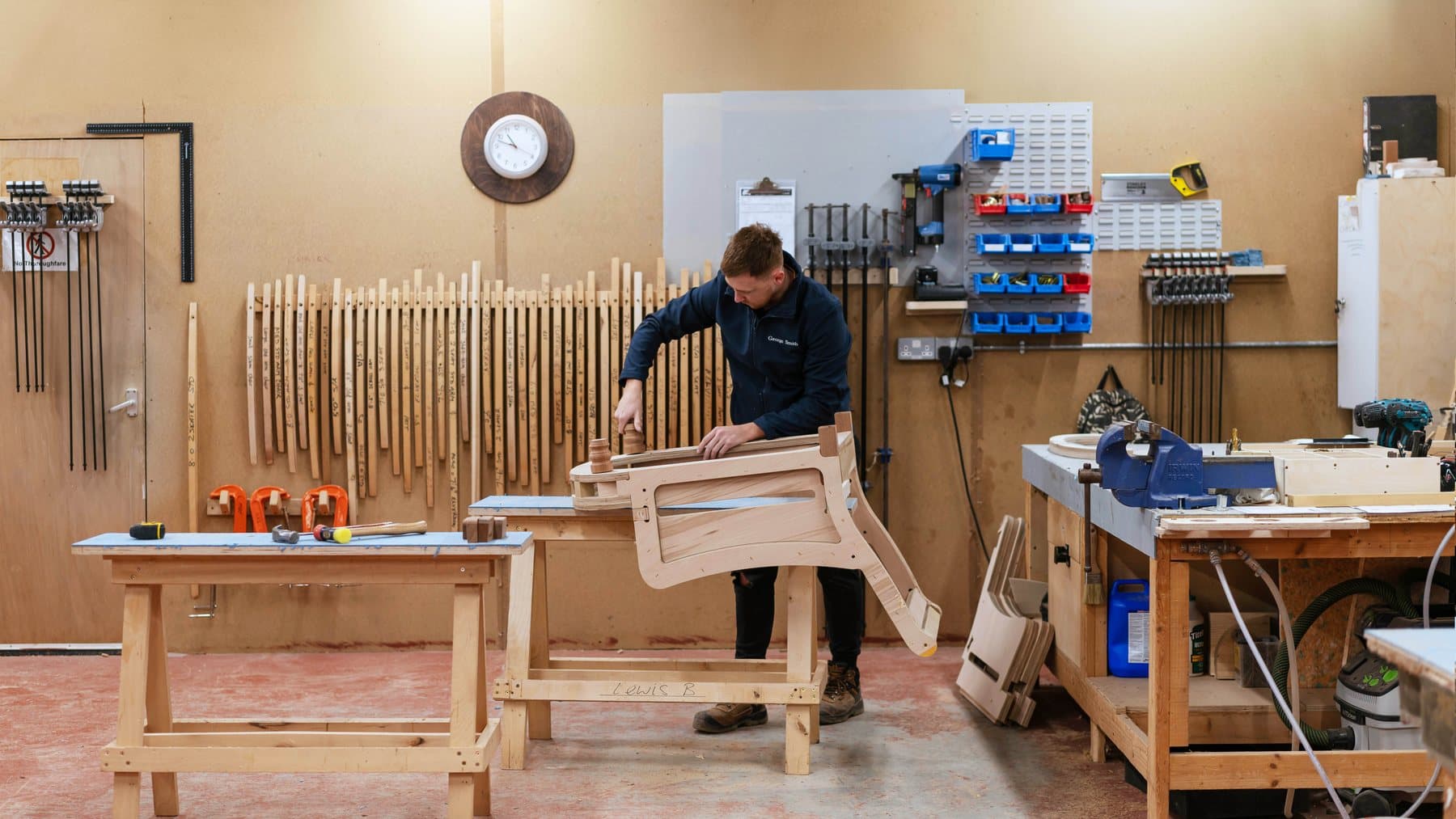
Answers supplied by George Smith in writing, edited for house style and approved for publication by George Smith on 23 October 2026. Photograph supplied by George Smith.
The Furniture Magazine
Every issue, free in your inbox
Technique, tools and materials, finished work worth studying, trade news and jobs — free to the bench and the studio.
Subscribe Free