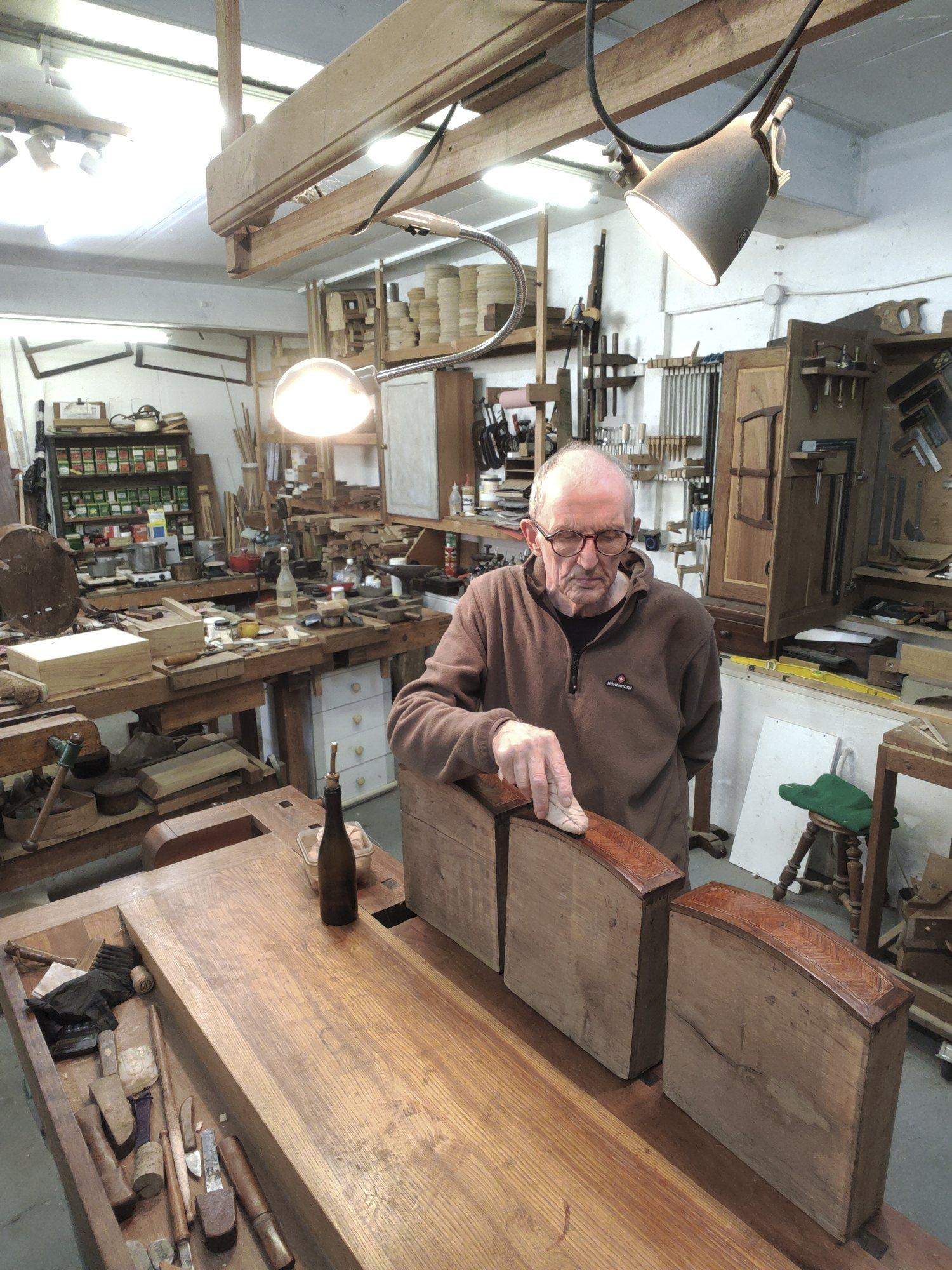
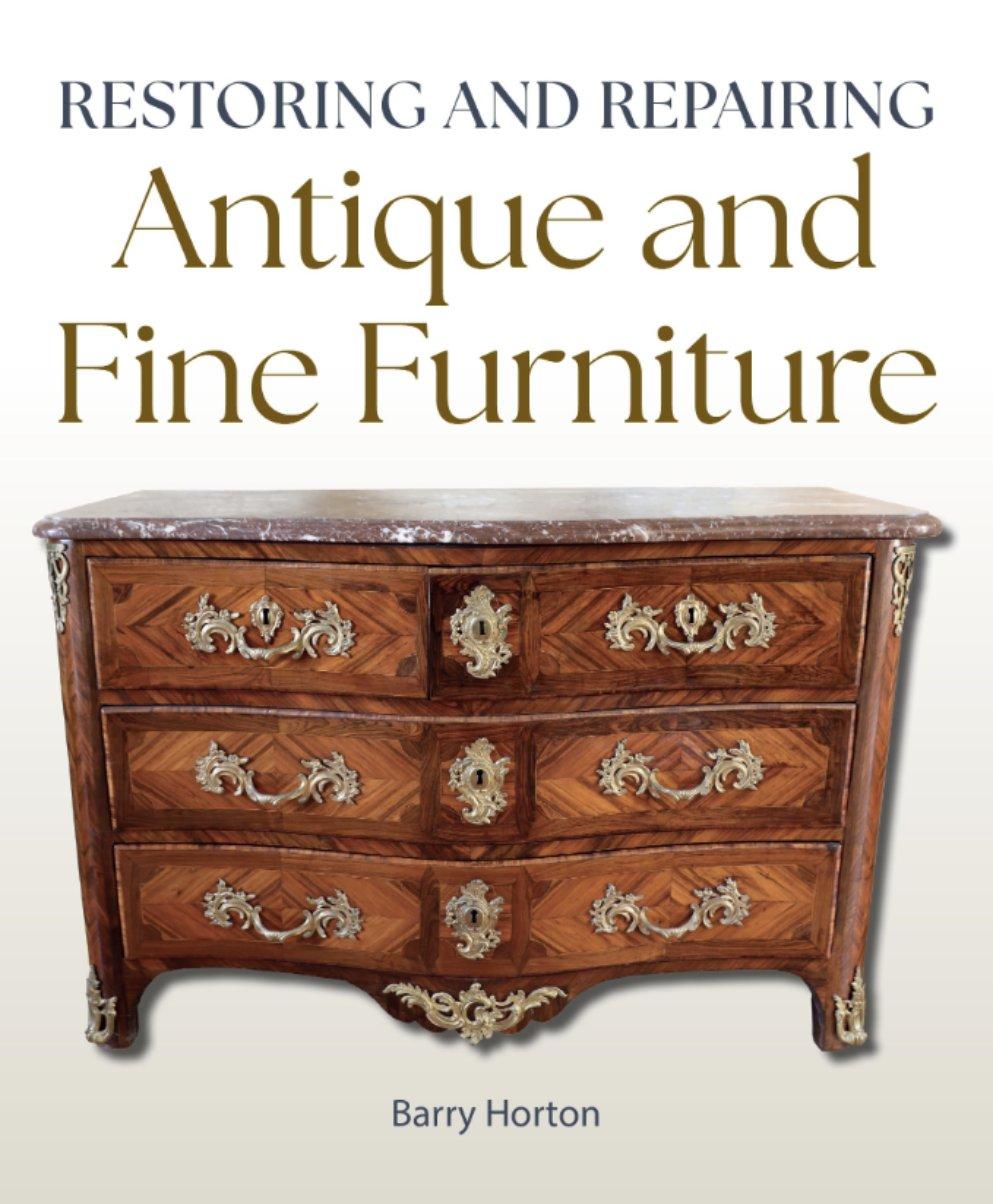
Barry Horton is a cabinet maker and antiques restorer who ran a restoration company in England, worked on projects for Leeds Museum and Hampton Court Palace, and now works in France. His book, Restoring and Repairing Antique and Fine Furniture, is published by The Crowood Press. He answered six questions for The Furniture Magazine in writing, and his answers are printed here in his own words.
Below the questions is an extract from the book, reproduced with the publisher's permission: the six-photograph sequence on the restitution of a plinth foot, and two paragraphs on consolidating decayed timber with Paraloid B72.
You write that the book is not for beginners. What does a cabinet maker need to unlearn before they can restore?
This is a difficult question, on the one hand I definitely do not want to discourage anyone from taking up furniture restoration as an interest, or career. But on the other hand, a piece of fine antique furniture is not the place to learn hand tool skills, so the book assumes some ability has been acquired previously. A cabinet maker simply has to take a traditional approach, unplug and leave chemical-based adhesives in the cupboard. Everything, he or she does, should be reversible at a later date. This is absolutely the most important principle I would like to get out to a wider audience.
Where is the line between a repair the piece needs and an intervention it does not?
The least invasive approach, is the right approach. However, that said choices are then qualified by end use. Take for instance the case of a badly worm-eaten chair. Following infestation treatment, a display situation, like in a museum, or even a private collection, may only require stabilisation of the damaged elements, then whatever surface repairs are needed. If however, the chair is to serve its original function, then the weakened structural elements would either need reinforcing, or completely replacing. So that line, although philosophically rigid, is drawn on moving sands.
You give your own position on woodworm rather than a rule. Why?
People have to take their own stance regarding public liability, this is generally driven by insurance terms, and exacerbated by the scaremongering of those selling woodworm eradication products and services. I gave my own personal experience and approach as a balance within an area that seems to have thrown common sense on the bonfire, along with grandma’s beloved bookcase because it had one or two wormholes.
What is the single technique in the book you most wish had been written down for you forty years ago?
I had to think about this one, and then came up with two. Marquetry lifting, reverse repairing on a mount board, and removing rust through electrolysis. Incidentally the latter will be fully stretched to the limit shortly. Just this week, a badly rusted 300-year-old French musket, as portrayed by the ‘Three Musketeers’, was brought into the workshop. Time to rethink my electrolysis tank.
Hampton Court and Leeds Museum on one side, a client's kitchen chair on the other: what changes between them, and what does not?
We partly covered this question earlier when talking about degrees of intervention. So I’d like to change the perspective slightly if I may. My work for both Leeds Museum and Hampton Court was to recreate missing elements, so not strictly restoration as such. Nevertheless, the same constraints of authentic technique and reversibility still applied. Both institutions had done their own research and supplied detailed dimensioned drawings that had to be followed exactly. Not only for authenticity, but to mate with work from other disciplines. Naturally we also liaised with one another. The sheer number of professionals involved to bring these projects together creates a very different environment from the “seemingly” unpressurised relationships with private clients.
What should a British workshop learn from the French métiers d'art tradition?
Free, every fortnight
Get the next issue in your inbox
Technique, finished work, trade news and live jobs, for the bench and the studio.
Free, every fortnight. One click unsubscribes. See our privacy policy.
I think a British workshop would quickly adapt to the French métiers d'art tradition, because although the skills are carried forward by the artisans themselves, this is made easier by the attitude of the French people and government. The French treat craft as their national living heritage, not simply a trade. A cabinetmaker or a gilder is seen as the custodian of knowledge and skill that took centuries to build, and the country backs that belief with real structures: formal recognition for craftspeople, state support for passing a skill to an apprentice, and a path from apprenticeship through journeyman years to registration with the Chambre des métiers. Registration brings a SIRET number that identifies the trade, so that the public and suppliers know what the artisan is qualified to practise.
So most importantly, British trades would do well to get back to proper craft apprenticeships, like the old City and Guilds model, with ongoing support and accreditation. This would do much to build the mutual trust and respect enjoyed by artisans in France. That said, there seems to be a quiet revolution taking place in the UK, a renaissance and return to hand tool skills. The public too are more and more rediscovering the joy of owning something created, or restored for them by hand. If that trend continues, the future of British furniture making looks brighter than at any time in the past decade or so.
From the book: restitution of a plinth foot
Extracted from Restoring and Repairing Antique and Fine Furniture by Barry Horton, published by The Crowood Press (2026).
Step by step: restitution of a plinth foot (page 146)
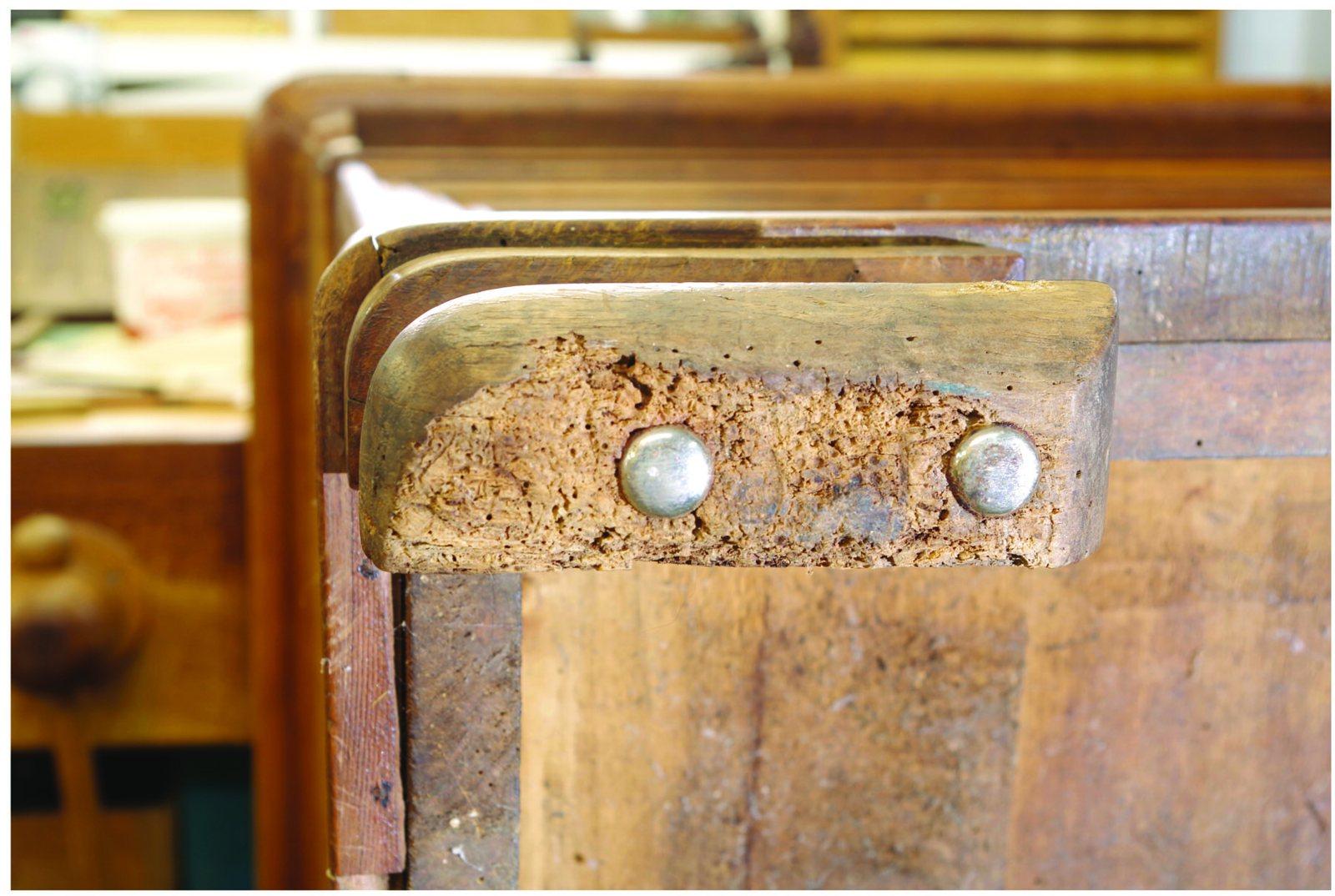
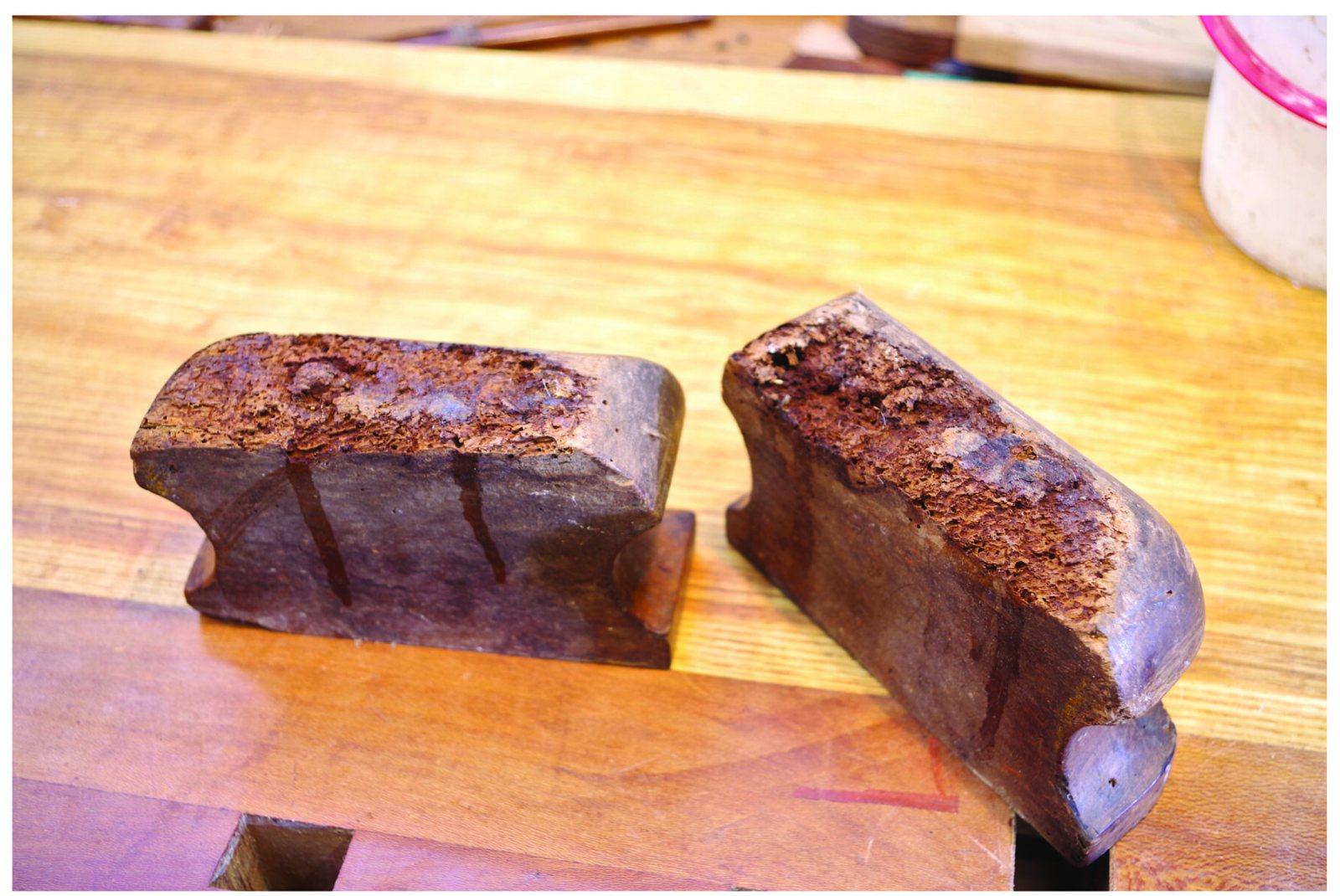
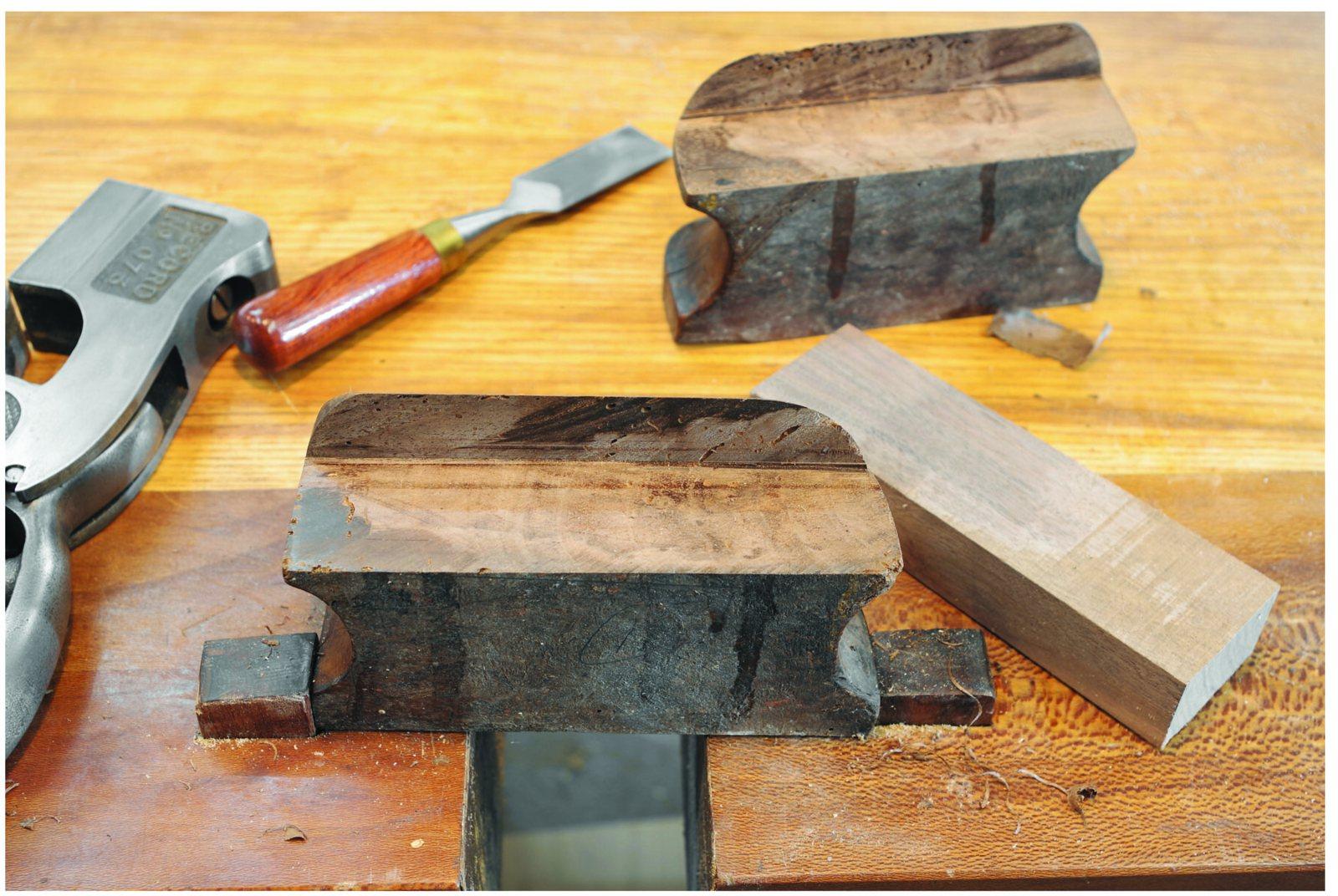
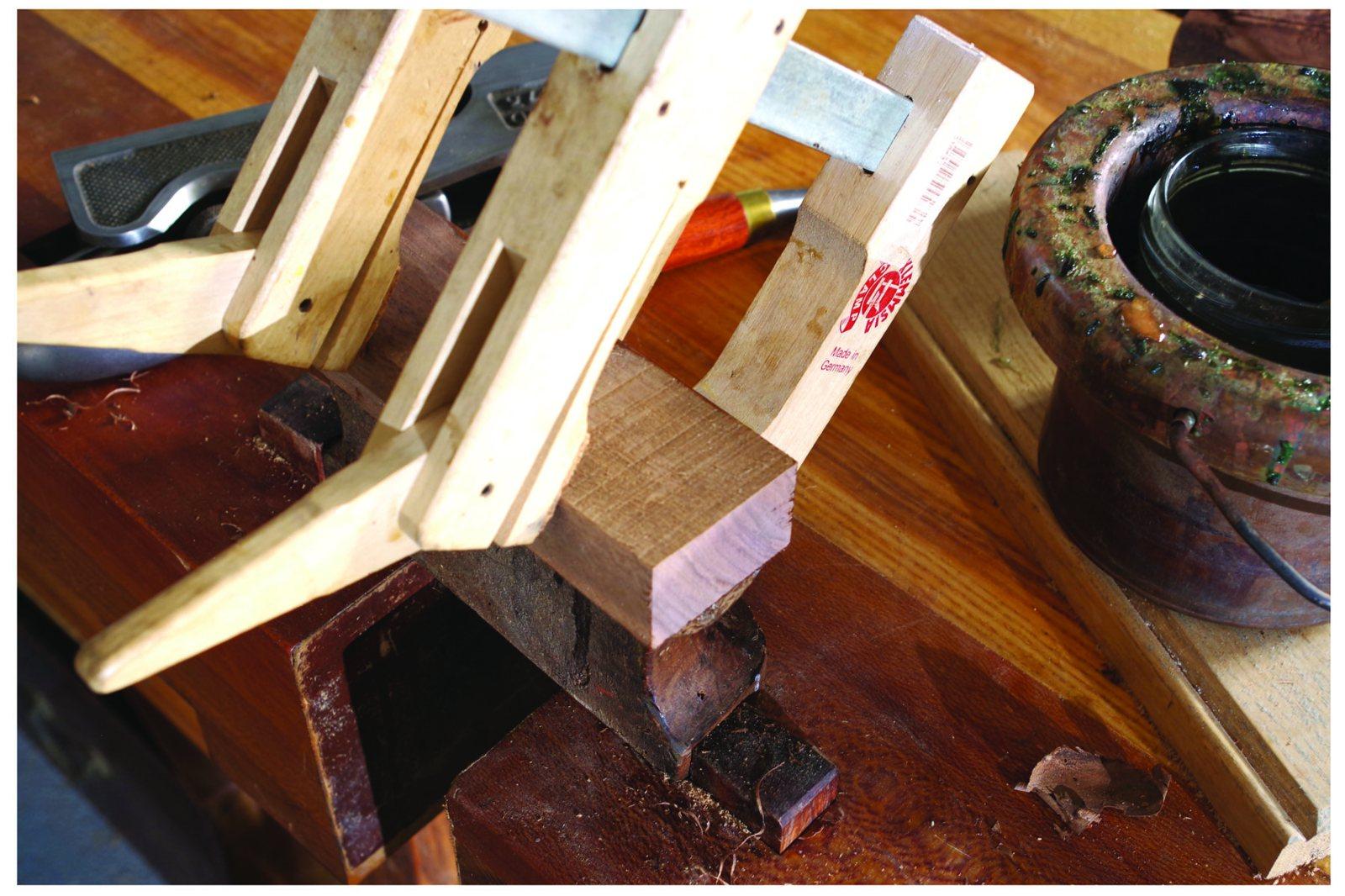
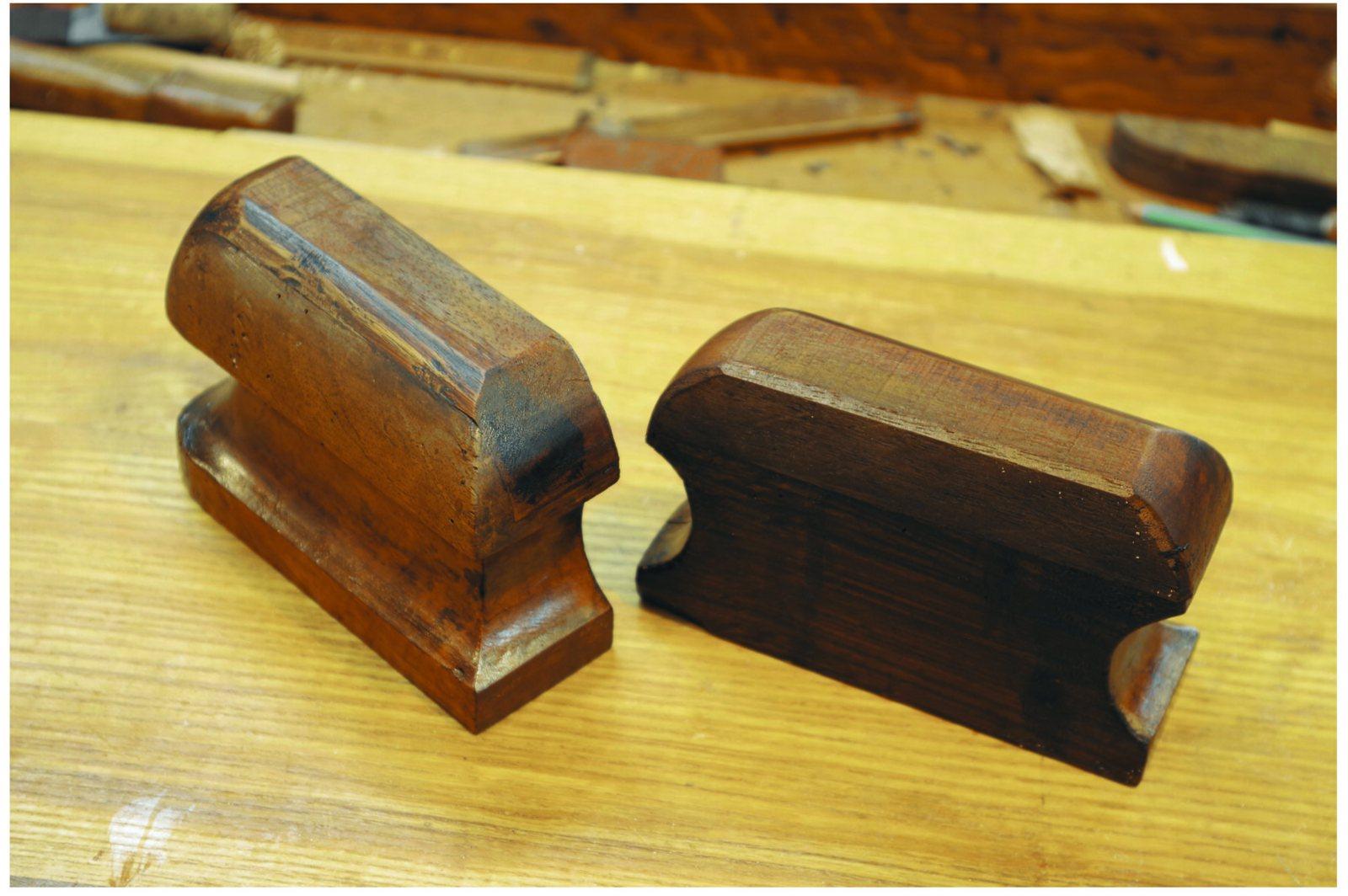
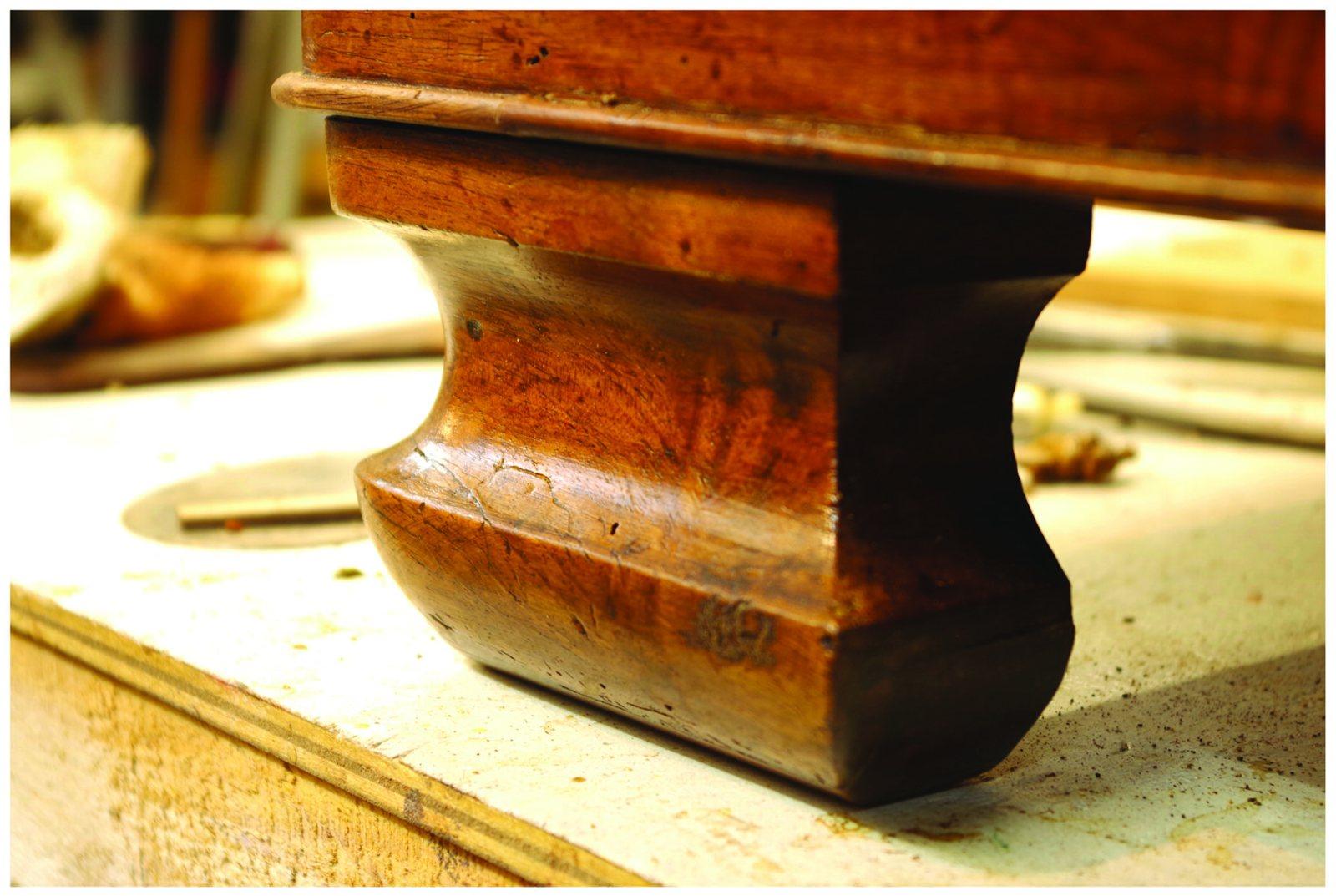
Consolidating decayed timber (pages 138 and 139)
To use Paraloid B72, polished surfaces should be gently stripped back, and the Paraloid B72 solution applied generously with a brush. Woodworm flight holes and galleries should be filled using a syringe or pipette. Be cautious, though, as injecting solution into one hole can forcefully eject it from another – guaranteed to be straight at the restorer. The goal is to saturate the damaged fibres with as much solution as possible, so multiple coats may be necessary until the timber can no longer absorb any more. Apply each subsequent coat before the previous one has dried, otherwise penetration will be restricted. Complete submersion is an option for all objects of a smaller size: simply place the object in an empty container of suitable capacity and weigh it down if it’s likely to float. Then pour in sufficient Paraloid B72 solution until the object is fully covered. Once dry, any excess solution that has dried on the surface can be removed with a rag soaked in acetone.
Worm-eaten or rotted timber that has been treated with resin will cut more easily and without crumbling because the resin penetrates and fills the degraded fibres, consolidating them and so stabilising the wood. This will generally restore enough integrity to allow for clean cuts and more precise shaping, which would be impossible on fragile, friable timber. In addition the impregnated surface ensures far better adhesion when gluing, as the timber will provide a cleaner, dust-free and cohesive surface.
Where to buy the book
- Restoring and Repairing Antique and Fine Furniture, by Barry Horton. The Crowood Press, 2026.
- Paperback, 224 pages, ISBN 9780719846267. Recommended retail price £26.
- Available direct from The Crowood Press at crowood.com.
Buy the book from The Crowood Press
What is in the book: contents and author
Answers supplied in writing by Barry Horton through The Crowood Press, October 2026, in response to questions from The Furniture Magazine. Extract, photographs and captions © the copyright holders, reproduced by permission of The Crowood Press under a letter of agreement dated 29 October 2026. Photograph of Barry Horton supplied by The Crowood Press. This piece is editorial and was not paid for.
Know someone in the trade who should read this?
Send it to them. The magazine is free, and it grows one colleague at a time.
The Furniture Magazine
Every issue, free in your inbox
Technique, tools and materials, finished work worth studying, trade news and jobs — free to the bench and the studio.
Free, every fortnight. One click unsubscribes. See our privacy policy.