Ian Metheringham, owner of Radial Joinery in Lincoln, on the case-by-case calls behind the restoration of a listed entrance portico at Carlton-le-Moorland, and what they mean for anyone facing a rotten rail or a wormed leg.
How did you assess the rot and the old insect damage, and what told you which sections could be saved?
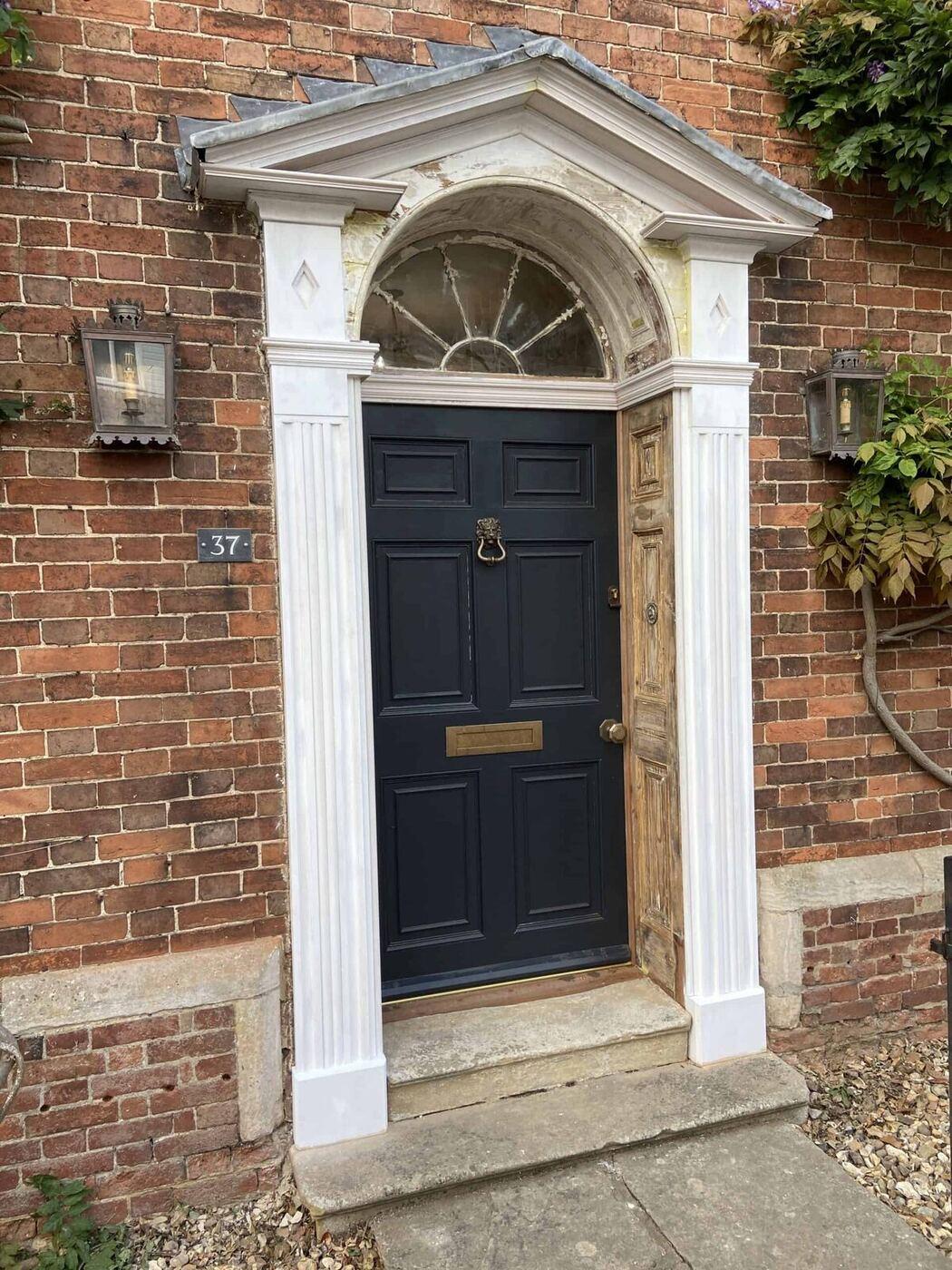
You could spot the rot as soon as we walked up to the portico. Big sections were missing and the timber had gone black from years of being saturated. Earlier filler repairs had failed as well, letting water back into the joints. The insect damage wasn't obvious until we removed the right-hand leg, the one that had been covered by wisteria for years. Its hidden rear face had all but turned to powder, and you could see countless insect galleries. We found more decay under the base blocks, including one someone had replaced in concrete. The wisteria also appeared to have pushed lead out of place above, letting moisture into the roof structure. I use a bradawl to probe the timber to see where the sound material stops. Paint hides rot, so you can't always judge by appearance. Throughout, we tried to keep as much original timber as possible.
Where did you draw the line between keeping original timber and replacing it?
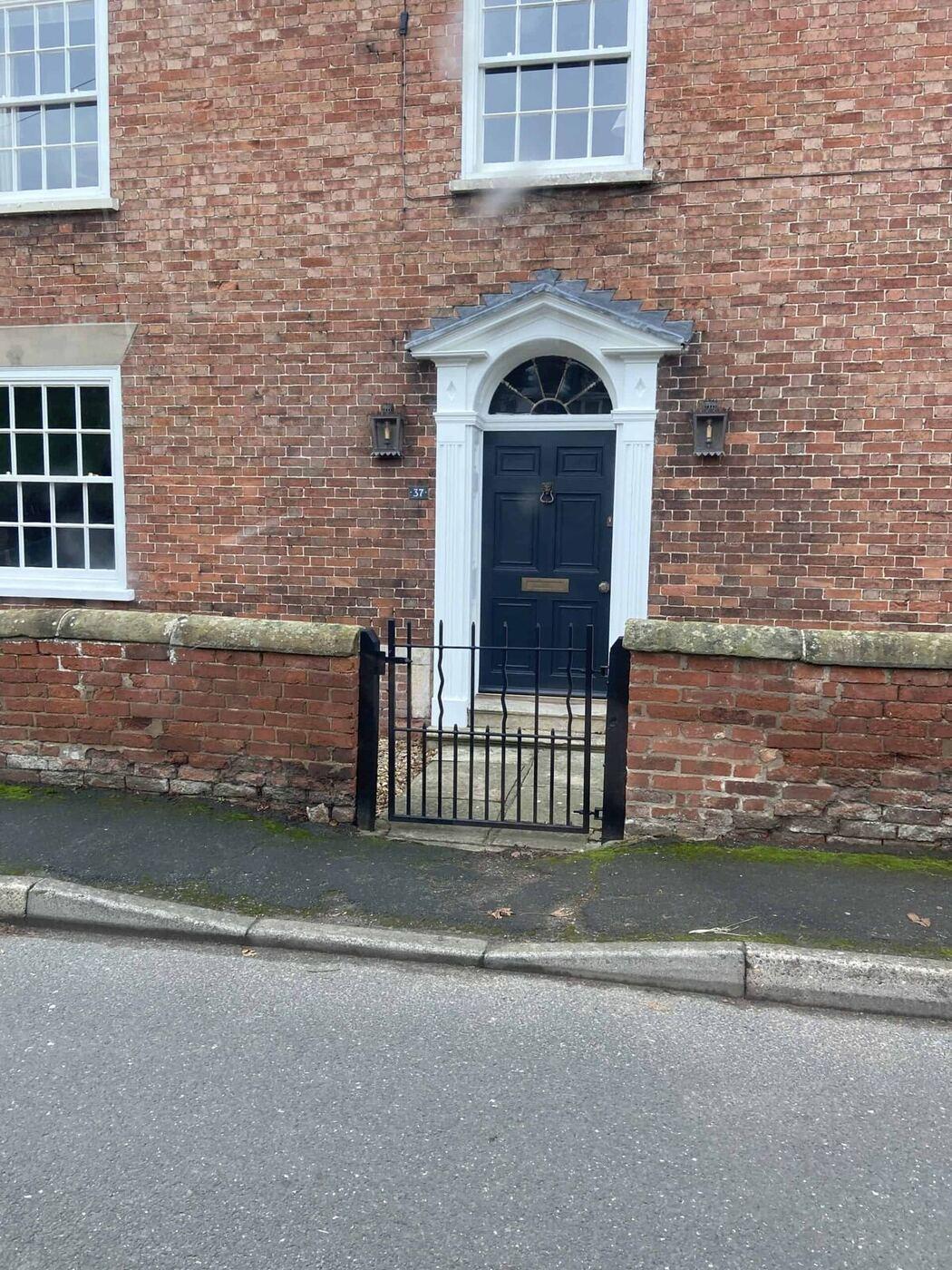
We made the call case by case, based on what we could physically fix to. If there was enough sound timber left, we'd cut back to solid material, treat it and splice in new timber with resin repairs. But the two legs were riddled with rot and insect damage, and there was nothing solid left to join onto. It would have been like trying to put a screw into a sponge, so those had to be replaced completely. Higher up, the curved panels were largely sound, with only the bottom edges needing local repairs, and we treated the retained original timber against woodworm. There isn't a hard and fast rule, but you develop a feel for where a sound repair is still possible. The aim is always to preserve as much original material as you can without compromising the repair.
How did you match the profiles, joints and finish so the new work sits with the old?
We remade the two supporting legs completely, using the originals as references for the moulding details. Back at the workshop, we matched the traditional coves, beads and square profiles against our cutters. We'd previously had cutters made to match missing panel beading on the property's internal doors, and the front door used the same profile. For unusual short runs we can also make a scratch stock. We joined several pieces of timber for the new legs using glued loose-tenon (Domino) joints. The legs were rebated to fit over the upper section, while the mouldings were mitred and pinned on, much as they had been originally. We also reproduced the deteriorated roof section. We sanded back the existing portico extensively and primed the new work on both faces in the workshop. Once it was installed, everything was prepared and primed again, and the client applied the final paint finish.
Free, every fortnight
Get the next issue in your inbox
Technique, finished work, trade news and live jobs, for the bench and the studio.
Free, every fortnight. One click unsubscribes. See our privacy policy.
What would you tell a furniture restorer facing the same choice over a rotten rail or a wormed leg?
I haven't specialised in furniture restoration, but the principle is the same as with architectural joinery: remove the damaged timber and retain as much of the original history as possible. There comes a point, though, when strength and function must take priority. A table leg has to support the table and stand up to daily use. If the timber is rotten or riddled with insect galleries, there's no sound material for a reliable repair. I'd try to match the timber species and grain where the repair is visible, and choose a fixing method suited to the piece. That might be a traditional half-lap or mortice-and-tenon joint, with an appropriate adhesive or resin where suitable. It's not about using the most complicated technique. It's about a repair that respects the original and allows the object to do its job.
What did the job teach the workshop?
Every day working on older joinery is a learning day. You see how craftspeople approached problems long before modern machinery and products were available. One of the things this job reinforced for me is that you don't always need to reinvent the wheel. Some simple nailed and glued details have survived for generations because they worked in that situation. There's absolutely a place for more elaborate traditional joints, such as mortice and tenon, but the skill is in knowing where and when they're appropriate. Timber is also a natural material: it moves with changes in conditions, and you can never predict every little change. Restoring old work teaches you to respect both the material and the judgement of the people who made it.
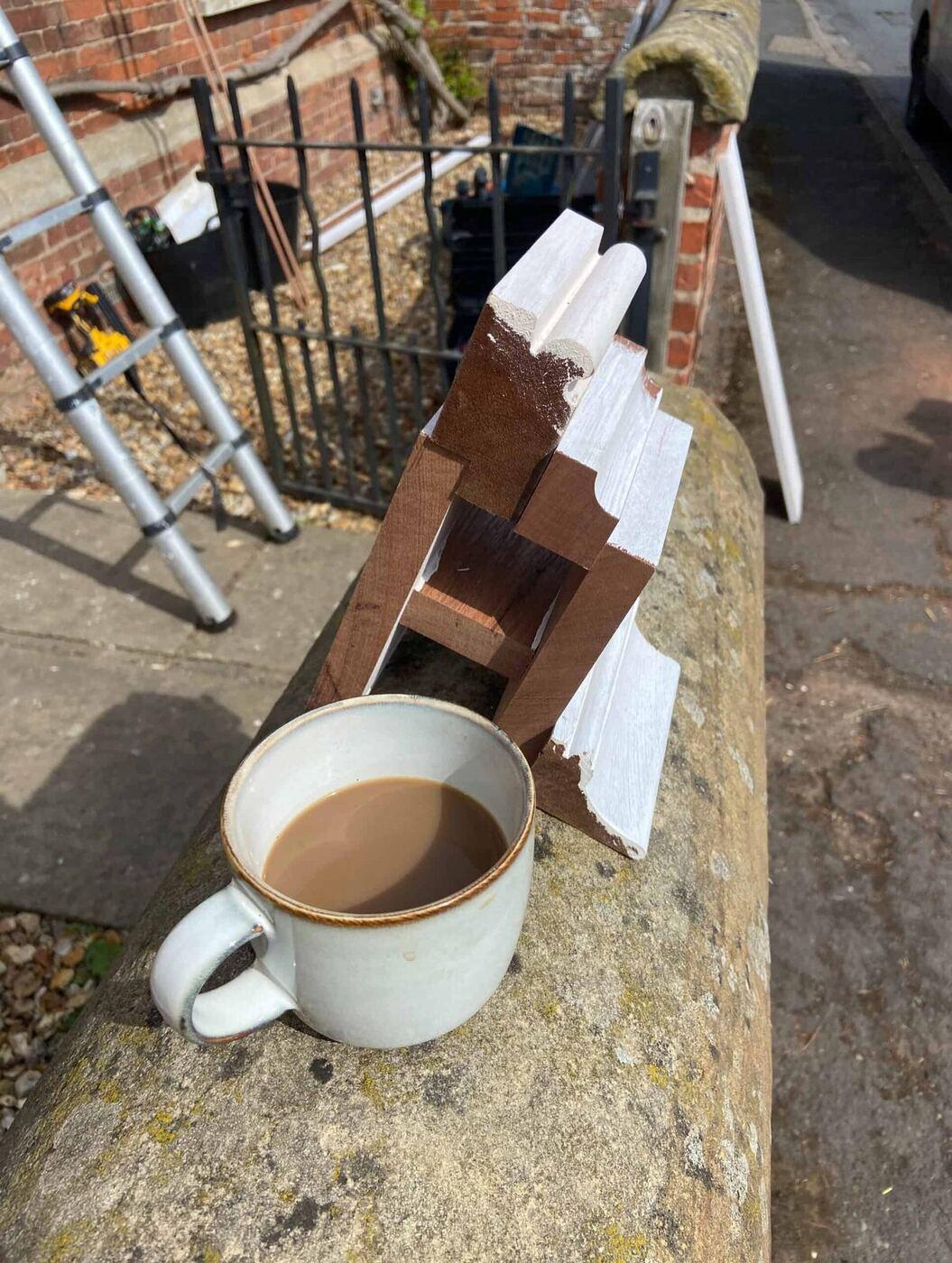
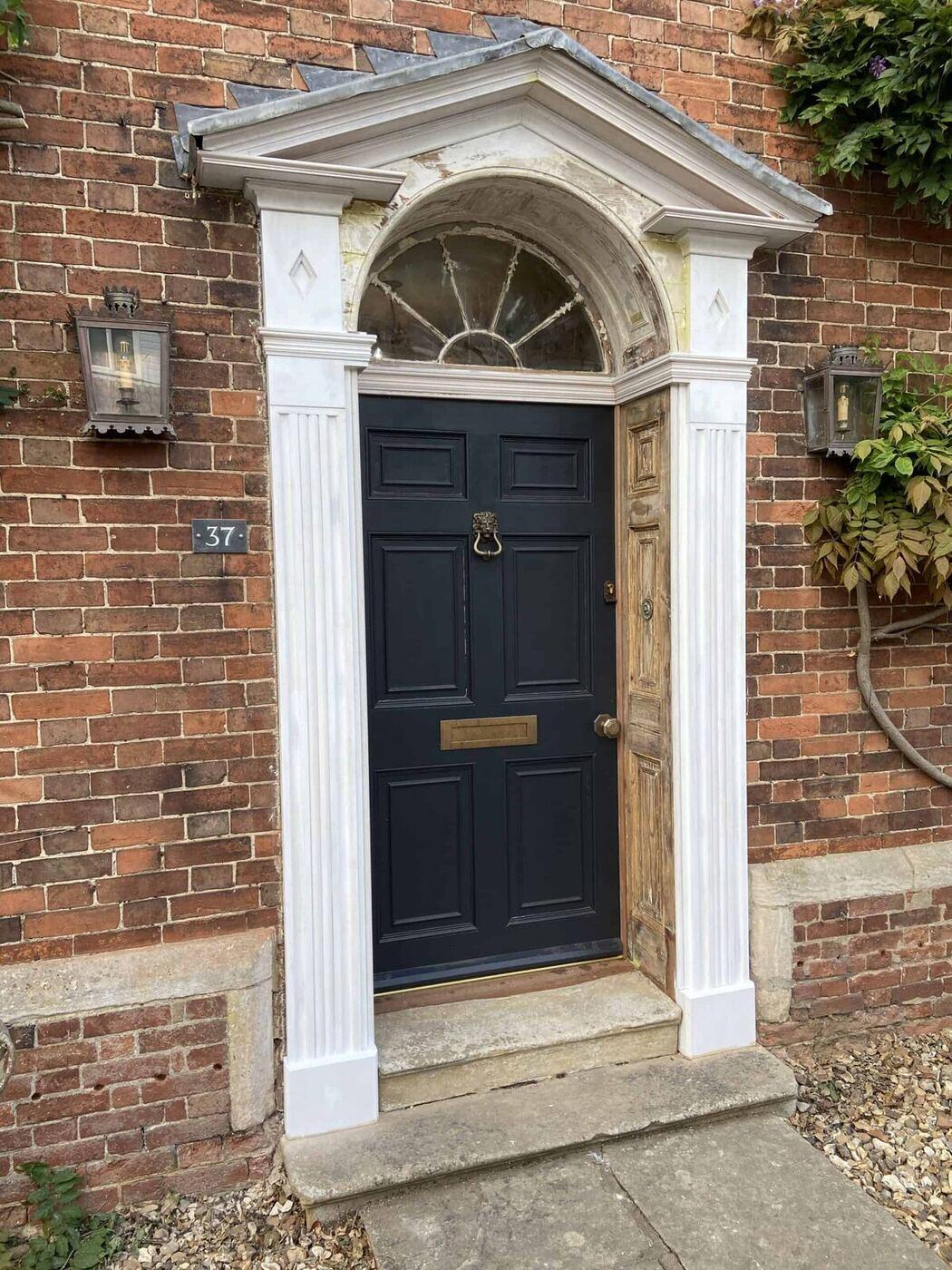
Photographs: Ian Metheringham / Radial Joinery.
Ian Metheringham answered our questions by email on 23 October 2026 and approved the edited text on 1 November. The photographs are his, published with the customer's permission.
Know someone in the trade who should read this?
Send it to them. The magazine is free, and it grows one colleague at a time.
The Furniture Magazine
Every issue, free in your inbox
Technique, tools and materials, finished work worth studying, trade news and jobs — free to the bench and the studio.
Free, every fortnight. One click unsubscribes. See our privacy policy.