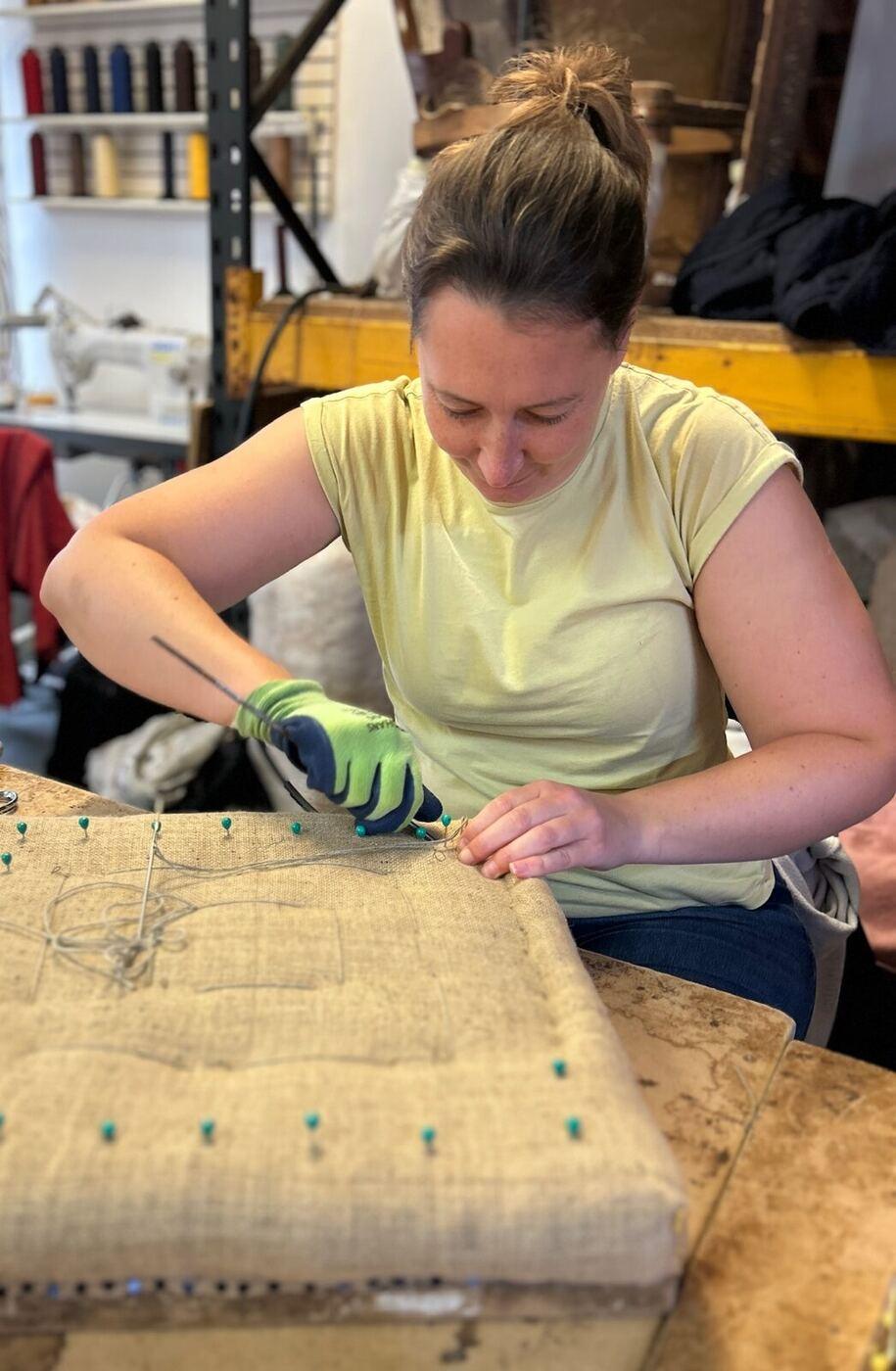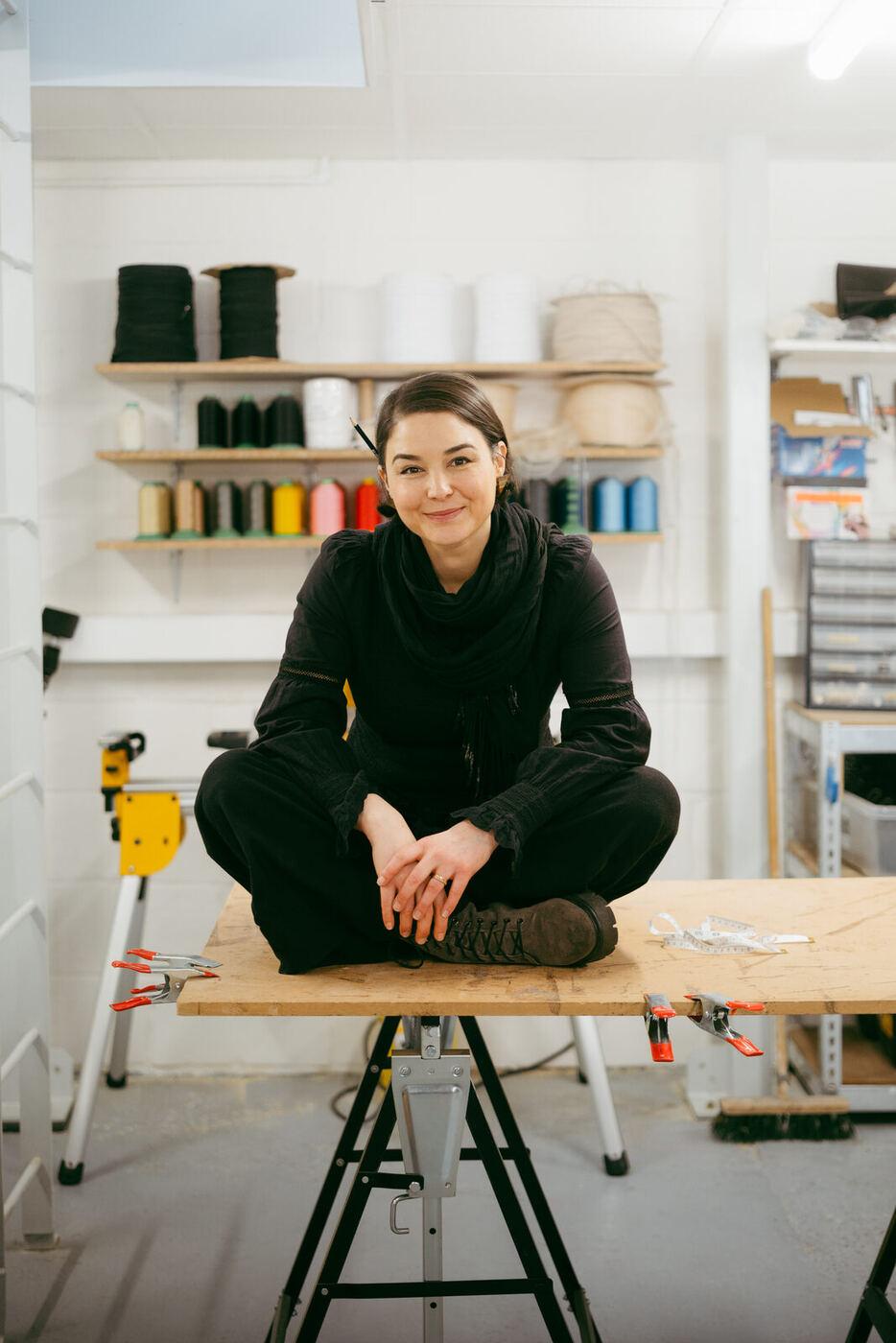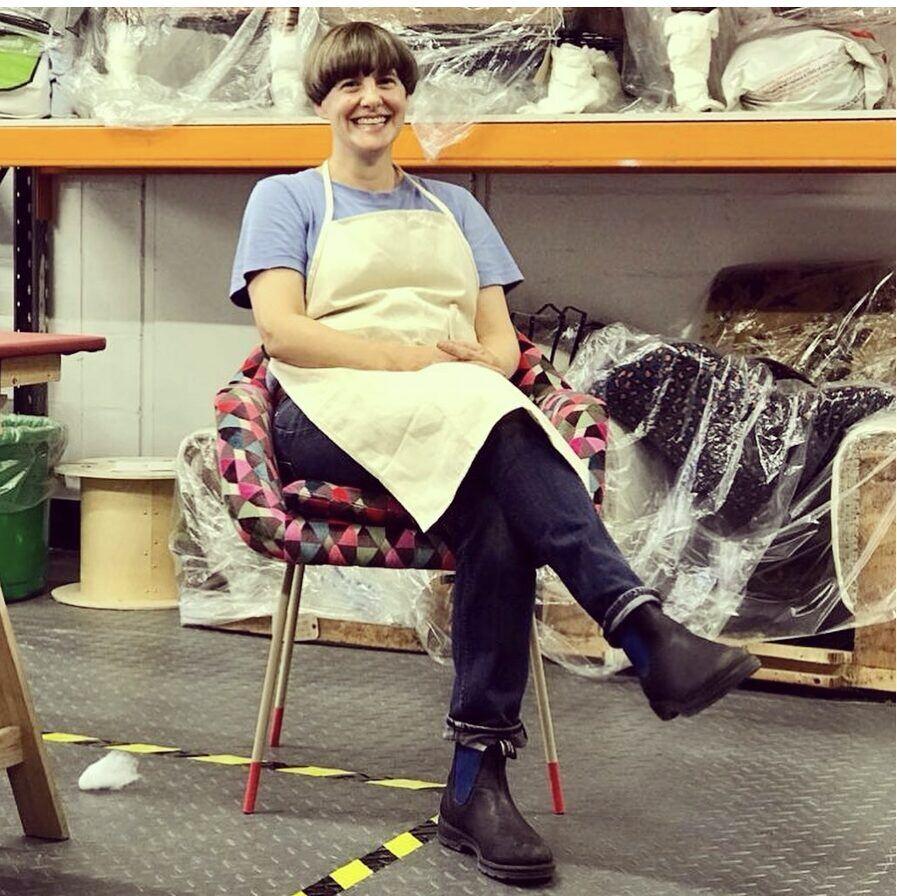
Rachael South is Upholstery Course Lead and Tutor at the East London Furniture Institute (ELFI) in the Royal Docks, which teaches the furniture T Level and AMUSF upholstery qualifications. We asked her five questions about choosing where to train. Her answers are below, in her words.
What should someone look for when choosing an upholstery course?
I think the most important thing is to find a course that suits your interests, your experience and what you hope to achieve. Do you want a class to complete one piece of furniture only? If so, a leisure class may be best. Or are you looking to enter the upholstery industry? Then a longer professional qualification course might be more appropriate.
Something else to consider is the balance between practical work and theory, and the experience of the tutors and the facilities available. Upholstery is a hands-on craft, so plenty of workshop time and opportunities to practise different techniques are essential. I would also recommend looking at the range of projects students complete and whether the course teaches both traditional and modern upholstery methods.
I would encourage beginners to think about how much time they can commit, and whether they want to learn for pleasure or pursue upholstery professionally.
Short course, AMUSF qualification or T Level: how should a beginner choose?
It really depends on what you want to get out of learning upholstery. A short course is a great introduction for someone who wants to try upholstery or develop a new hobby.
An AMUSF qualification offers more structured training and is particularly suitable for adults wanting to develop their professional skills or work towards a career in upholstery.
The T Level is for 16 to 18 year old learners. It is the equivalent of three A levels, so it is a great route to higher education or a career in furniture or the broader creative industries.
What should a student be able to do by the end of their first year?
By the end of their first year, I would expect students to have developed confidence using upholstery tools, materials and equipment safely. They should understand the basic principles of upholstery, be able to select appropriate materials and carry out a range of techniques with increasing independence. They should also be developing an eye for detail, accuracy and quality of finish.
Free, every fortnight
Get the next issue in your inbox
Technique, finished work, trade news and live jobs, for the bench and the studio.
Free, every fortnight. One click unsubscribes. See our privacy policy.
Just as importantly, I would hope they have started to understand how to approach problem solving, recognise mistakes and work out how to put them right.
What should they ask a training centre before signing up?
As this is such a hands-on activity, I would ask how much practical workshop time is included, what projects they will complete and whether materials and tools are provided. It is also worth finding out about class sizes.
You will want to feel confident with the teachers, so do a bit of research and find out about the experience of the tutors and the school itself. It can also be useful to see examples of previous students' work and, if possible, visit the workshop and speak to current learners. I always find workshop visits really inspiring!
I think it is important to get a feel for the learning environment and make sure it is somewhere you will feel comfortable asking questions and developing your skills.
What does a good tutor give a student that a book or a video cannot?
Of course YouTube and the rest have an answer for everything, and I have had learners ask me about my techniques because they saw it done a different way in a book or online. That is fine, there are often many ways of doing the same job, but I do not think you can beat being shown in person. There are so many subtleties to the techniques, especially in traditional upholstery: judging tension, stitching, handling materials and understanding how something should look and feel.
An experienced teacher can demonstrate techniques, recognise when a student is struggling and adapt their teaching to suit the individual. A teacher can also give a student the confidence to try things, make mistakes, ask questions and gradually develop their own judgement and independence. They can also observe how a student works and offer immediate, individual feedback.
That said, I love upholstery books and am always reading up on different ways to enhance my own practice, but I think they should add to what you have been taught in person, for the reasons above. I have been lucky enough to work with many wonderful upholsterers and learnt so much, hand to hand.
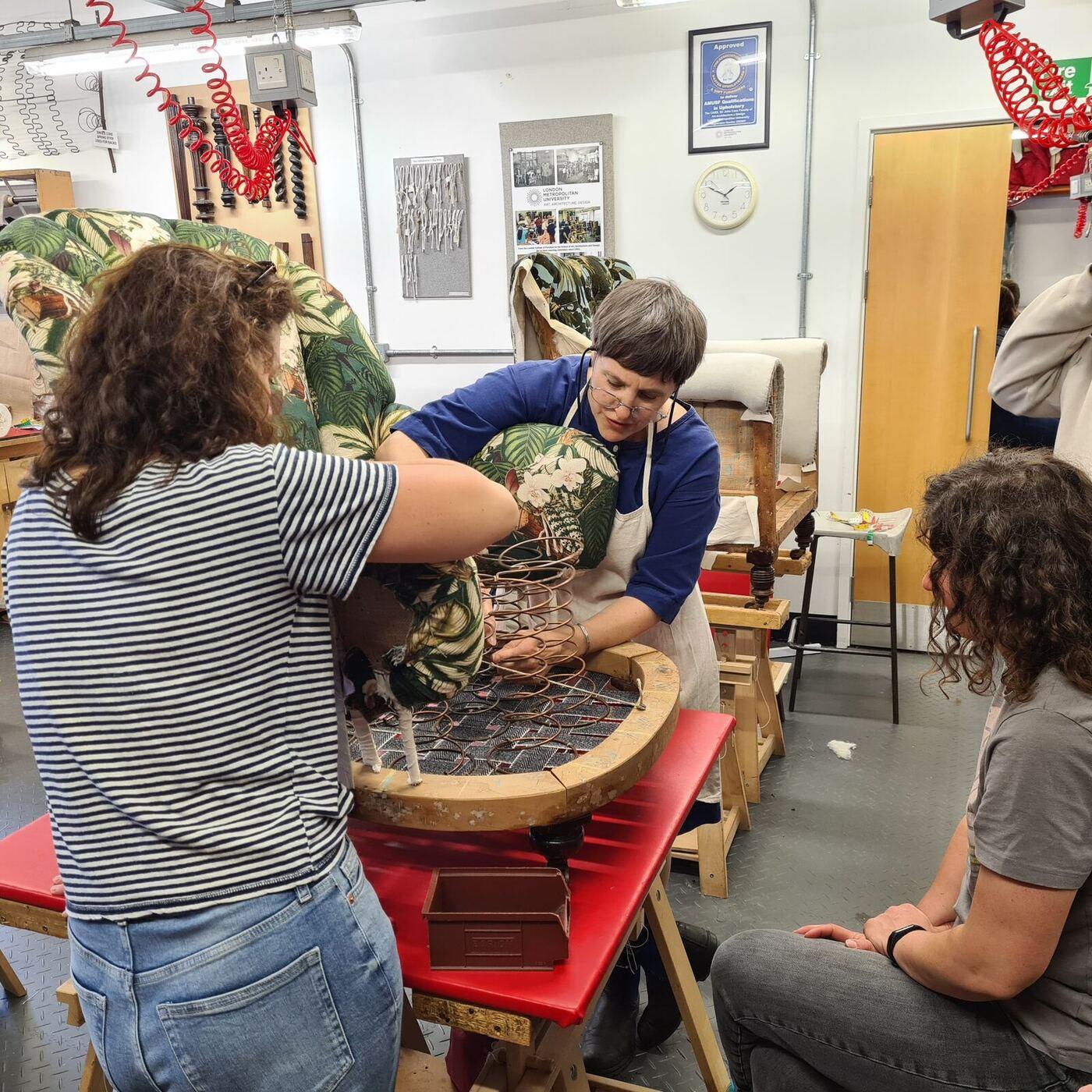
Rachael South answered our questions by email on 4 November 2026 and approved the edited text on 6 November. ELFI is at 15 University Way, Royal Docks, London E16 2RD; courses at elfi.uk.
East London Furniture Institute
Know someone in the trade who should read this?
Send it to them. The magazine is free, and it grows one colleague at a time.
The Furniture Magazine
Every issue, free in your inbox
Technique, tools and materials, finished work worth studying, trade news and jobs — free to the bench and the studio.
Free, every fortnight. One click unsubscribes. See our privacy policy.