In brief
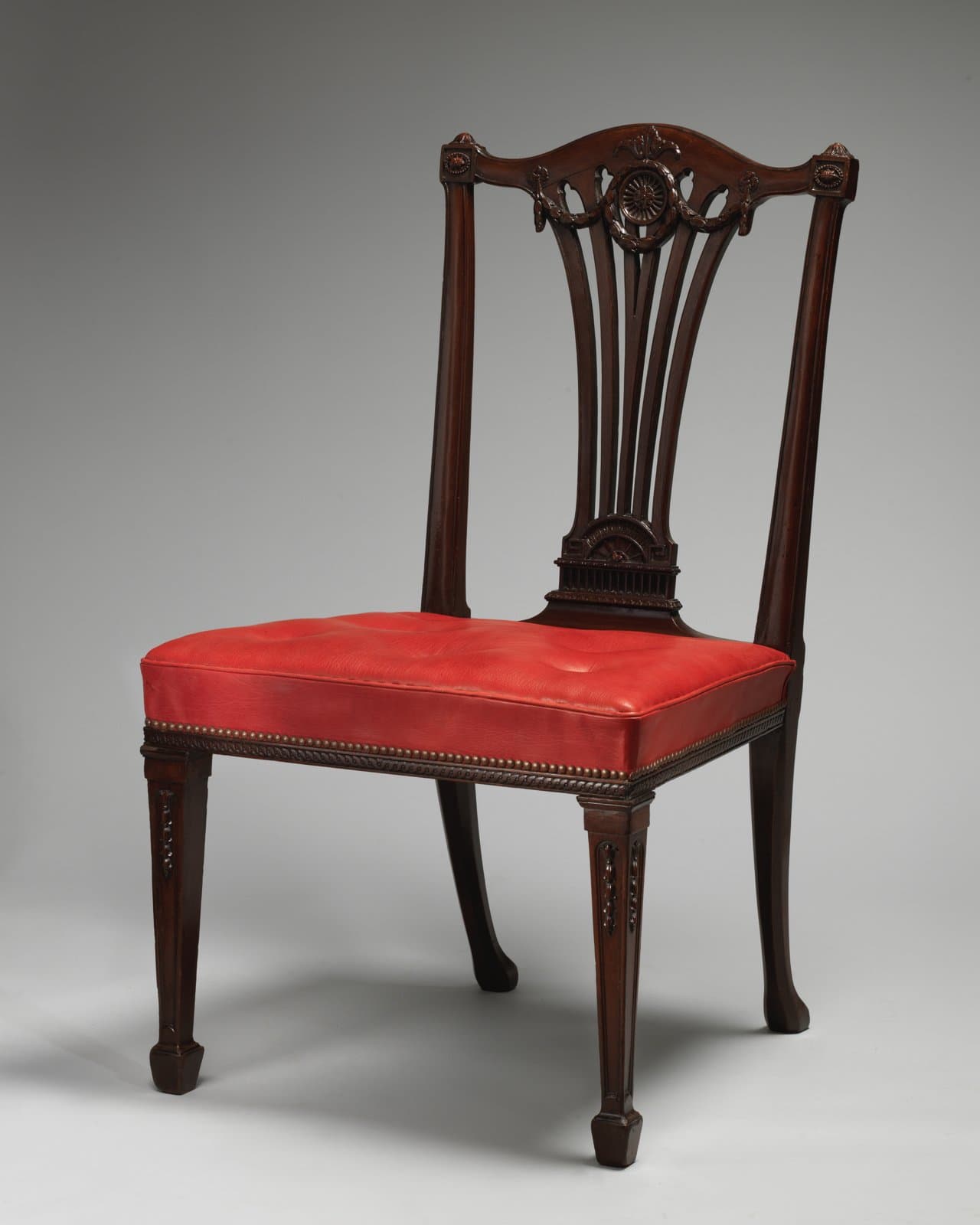
- Daniel Lascelles commissioned a set of fifteen dining chairs for Goldsborough Hall, Yorkshire, around 1772.
- Robert Adam drew them; Thomas Chippendale's workshop made them in mahogany. Fourteen survive.
- They stayed at Goldsborough until 1929, moved to Harewood House, and were sold at Christie's in London on 1 April 1976.
- One of the set is now at The Metropolitan Museum of Art, New York, shown in its dining room from Lansdowne House.
From the archive is an occasional series in The Piece. Each one takes a single commission from a museum collection and asks the questions we put to working makers: who asked for it, what it was made from, and what the bench can still learn from it. The photographs are public domain, released by the museum for anyone to use.
The commission
Daniel Lascelles was the younger brother of Edwin Lascelles of Harewood House. For his own house, Goldsborough Hall in Yorkshire, he ordered a set of fifteen dining chairs around 1772. Robert Adam supplied the design and Thomas Chippendale, born in Otley in 1718, made them.
Chippendale made similar sets with small variations, including one for Lansdowne House in London. The Goldsborough set stayed in the house until 1929, when it went to Harewood. It was sold at Christie, Manson and Woods in London on 1 April 1976, and fourteen chairs survive.
Free, every fortnight
Get the next issue in your inbox
Technique, finished work, trade news and live jobs, for the bench and the studio.
Subscribe freeWhat it is made of
The frames are mahogany. Each chair stands about 97 cm high, 56 cm wide and 57 cm deep. The seats are now covered in red morocco leather, a modern cover chosen to recreate the original, finished with a close line of nails along the seat rail.
What to look at
- The back tapers towards the seat, with an arched top rail and moulded sides finished with small carved roundels (paterae) and leaf finials.
- The splat fans out from a central roundel, with carved swags of bellflowers hanging either side.
- The legs are square and tapering, panelled, with carved husks running down them: a Neoclassical leg, not the cabriole leg most people picture when they hear Chippendale.
- The proportions of a working dining chair: a set of fifteen had to be comfortable, strong and identical, and fourteen of them have lasted more than 250 years.
The lesson for anyone making a set today is the same one Chippendale's workshop faced: the drawing is the easy part. Repeating carved detail fifteen times so the chairs read as one set at a dining table is where the time and the skill go.
The Furniture Magazine
Every issue, free in your inbox
Technique, tools and materials, finished work worth studying, trade news and jobs — free to the bench and the studio.
Subscribe Free