In brief
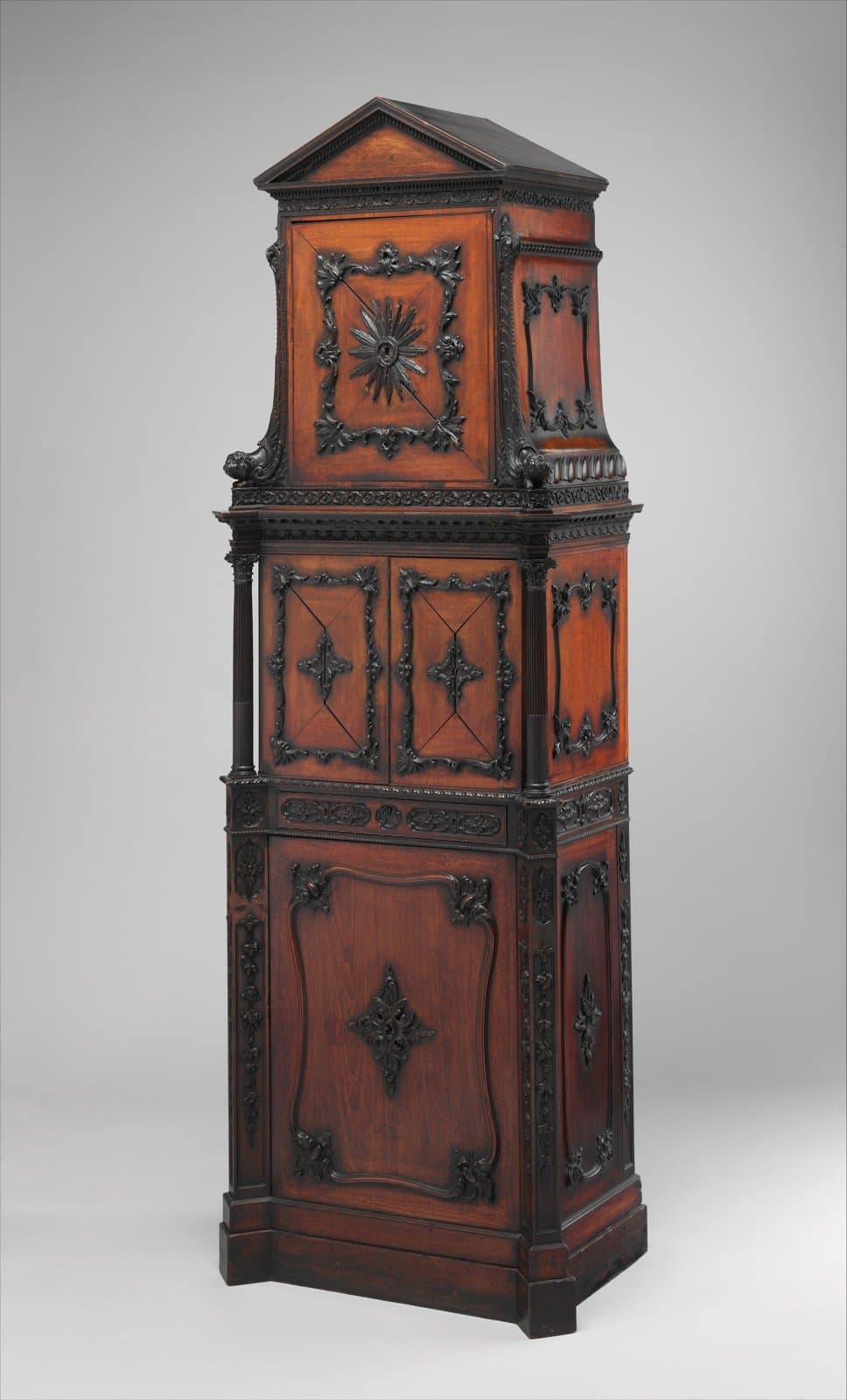
- A mahogany medal cabinet of 1760 to 1761, attributed to the royal cabinet makers William Vile and John Cobb.
- It has 135 shallow drawers made to hold more than 6,000 coins and medals.
- It was probably commissioned by the future George III for Buckingham House, as one end of a larger piece known as His Majesty's Grand Medal Case.
- Its matching companion is in the Victoria and Albert Museum, London.
From the archive is an occasional series in The Piece. Each one takes a single commission from a museum collection and asks the questions we put to working makers: who asked for it, what it was made from, and what the bench can still learn from it.
The commission
William Vile, born in Somerset in 1715, and his partner John Cobb were among the leading London cabinet makers of the mid eighteenth century. This cabinet is attributed to them and dated 1760 to 1761. It was probably commissioned by the future George III for Buckingham House, and formed one of two matching end sections of a larger ensemble recorded as His Majesty's Grand Medal Case. The other end section is in the Victoria and Albert Museum.
The collection it held was part of a prince's education: coins and medals of past rulers studied as history and as lessons in government. The carved star of the Order of the Garter on the upper door refers to his election to the order as Prince of Wales in 1750.
Free, every fortnight
Get the next issue in your inbox
Technique, finished work, trade news and live jobs, for the bench and the studio.
Subscribe freeWhat it is made of
Mahogany, with carved and applied decoration. It stands about 2 metres high, 69 cm wide and 44 cm deep. It was first made to sit on an open stand; Vile later filled in the space between the legs.
What to look at
- Drawer making at scale: 135 shallow drawers, each made to run smoothly and hold a tray of coins without sagging.
- Applied carving on flat panels, which lets a workshop carve detail separately and fix it to the carcase.
- A change made after delivery: the original open stand was filled in later, a reminder that commissions are often altered by the people who made them.
Anyone who has made a run of identical drawers will recognise the discipline here. The carved decoration catches the eye; the drawers are where the hours went.
The Furniture Magazine
Every issue, free in your inbox
Technique, tools and materials, finished work worth studying, trade news and jobs — free to the bench and the studio.
Subscribe Free