The Piece is one finished commission, told by the people who designed and made it. This one is from Paul Hodgkiss Designs in Glasgow's Southside.
Paul Hodgkiss, designer
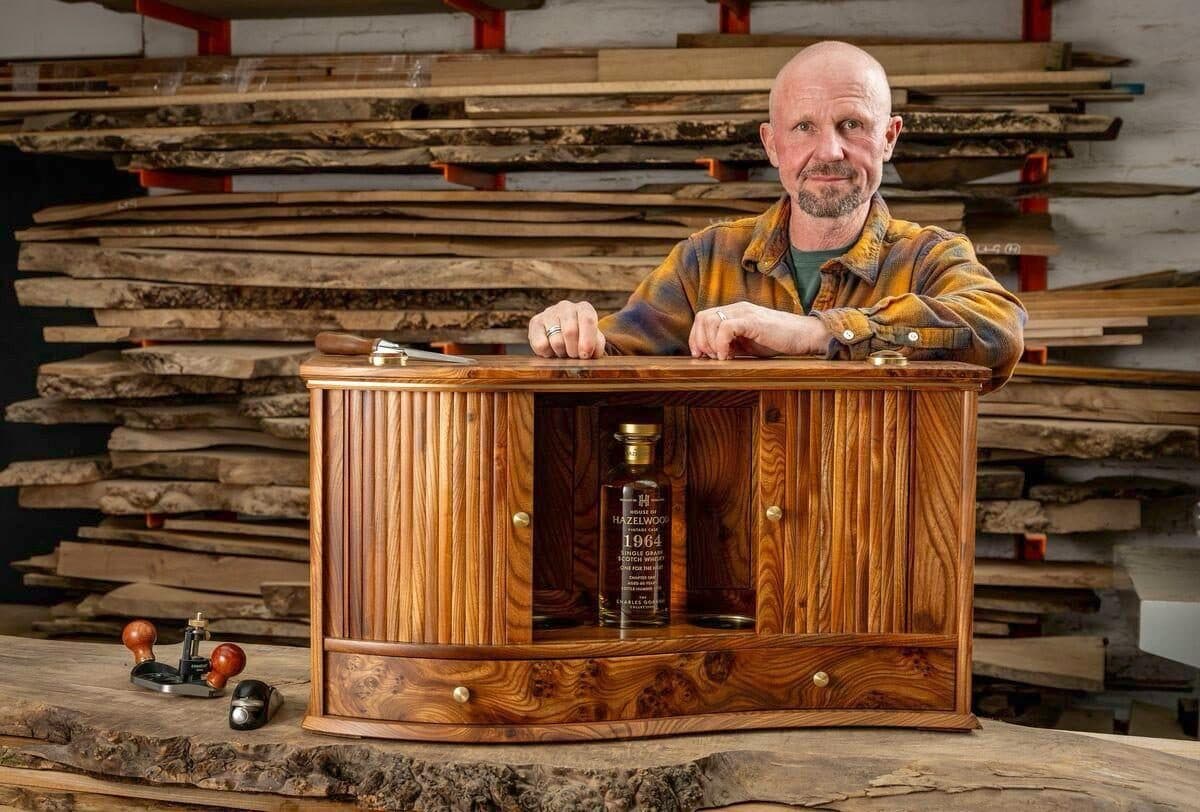
Our client, House of Hazelwood, commissioned us to design and make a whisky cabinet for six bottles. It would live in someone's home, the recipient being a collector.
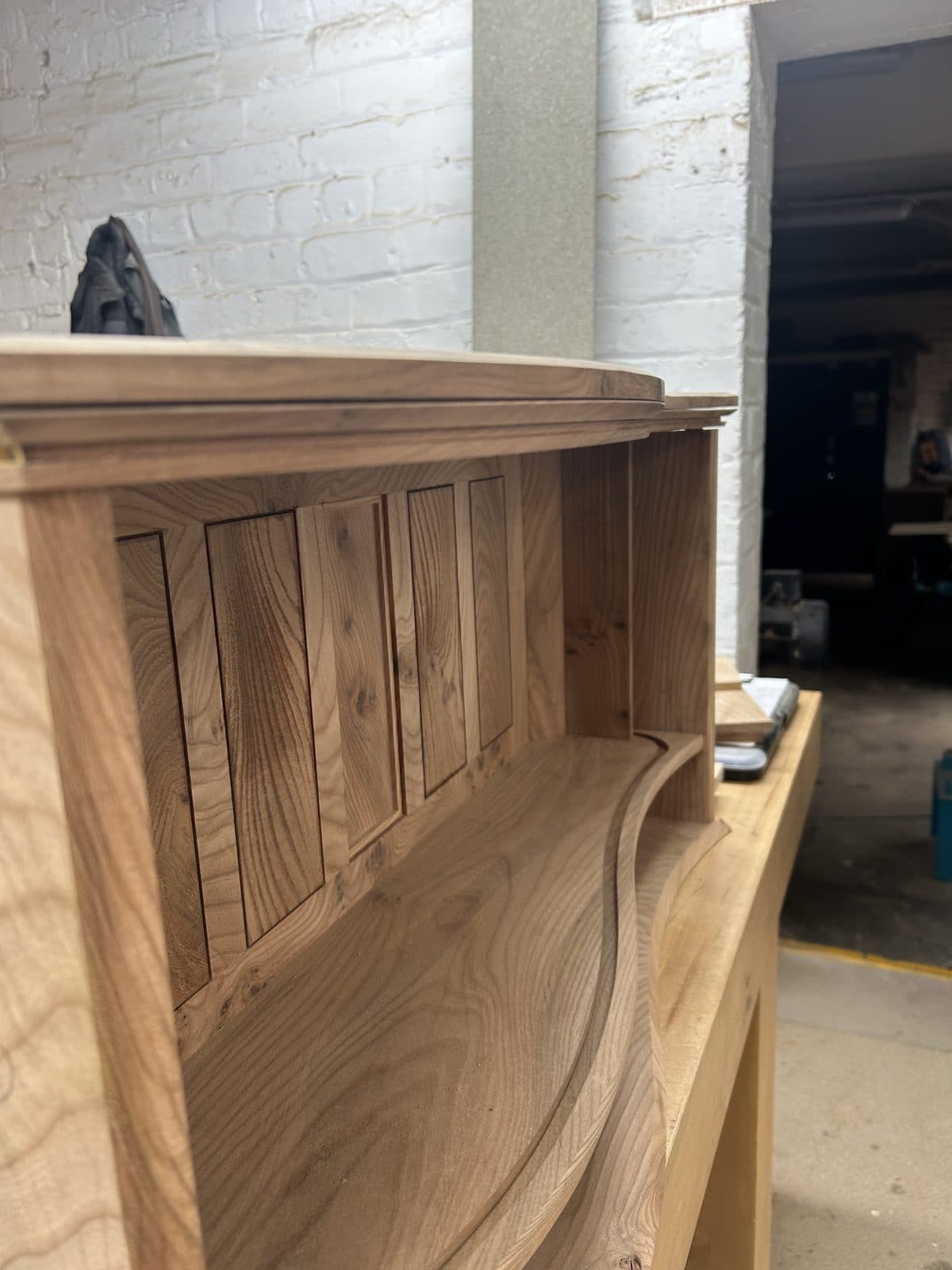
The first challenge was width. Six bottles take up a good deal of room, and to enjoy the beautiful decanter-style bottles, with the client's brand on display, the cabinet needed to stand comfortably open. I imagined the owner would like the choice of having it open or closed. With hinged doors, the open cabinet would have measured a whopping 1500mm wide: not very appealing aesthetically, proportionally or practically.
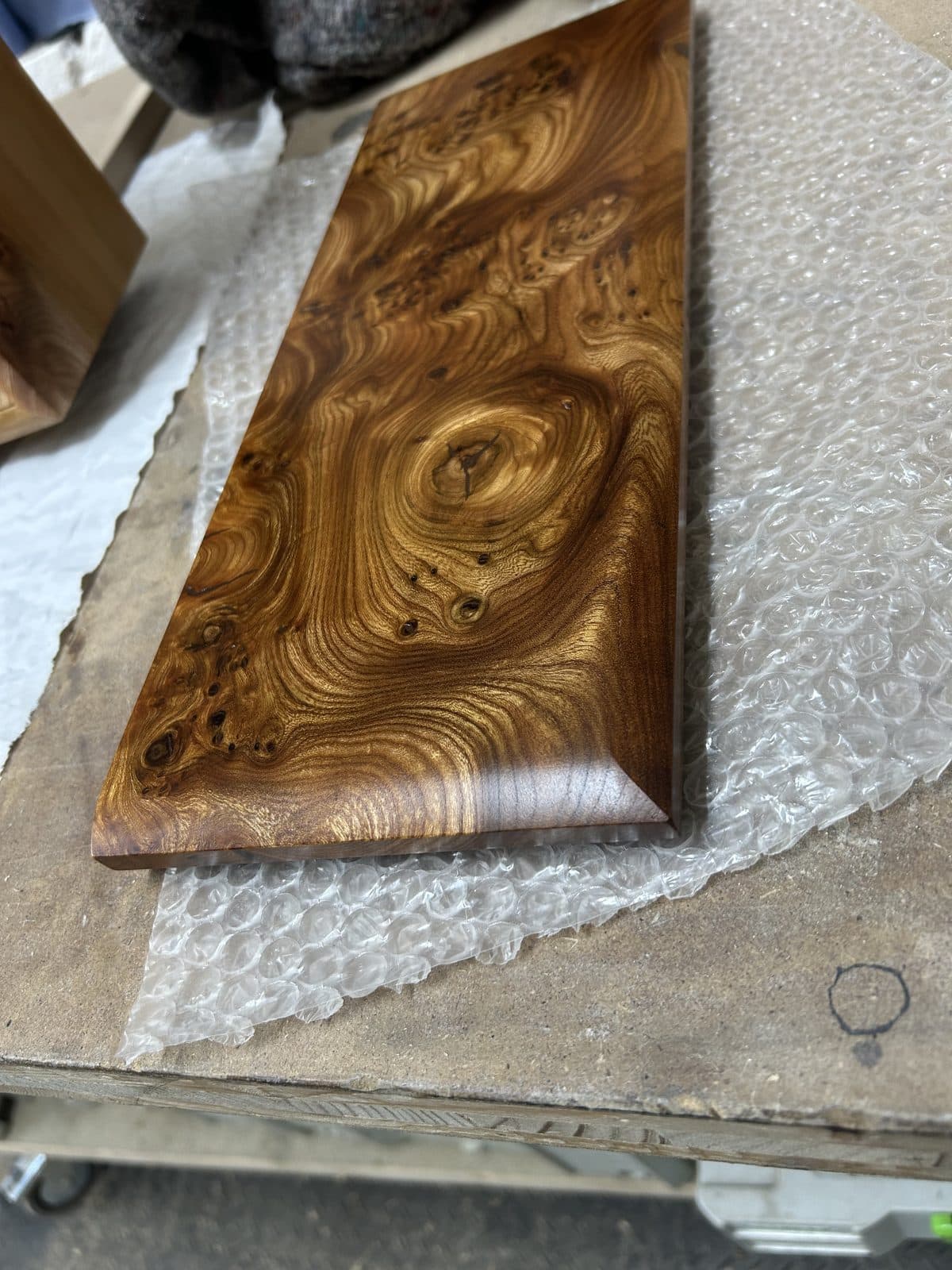
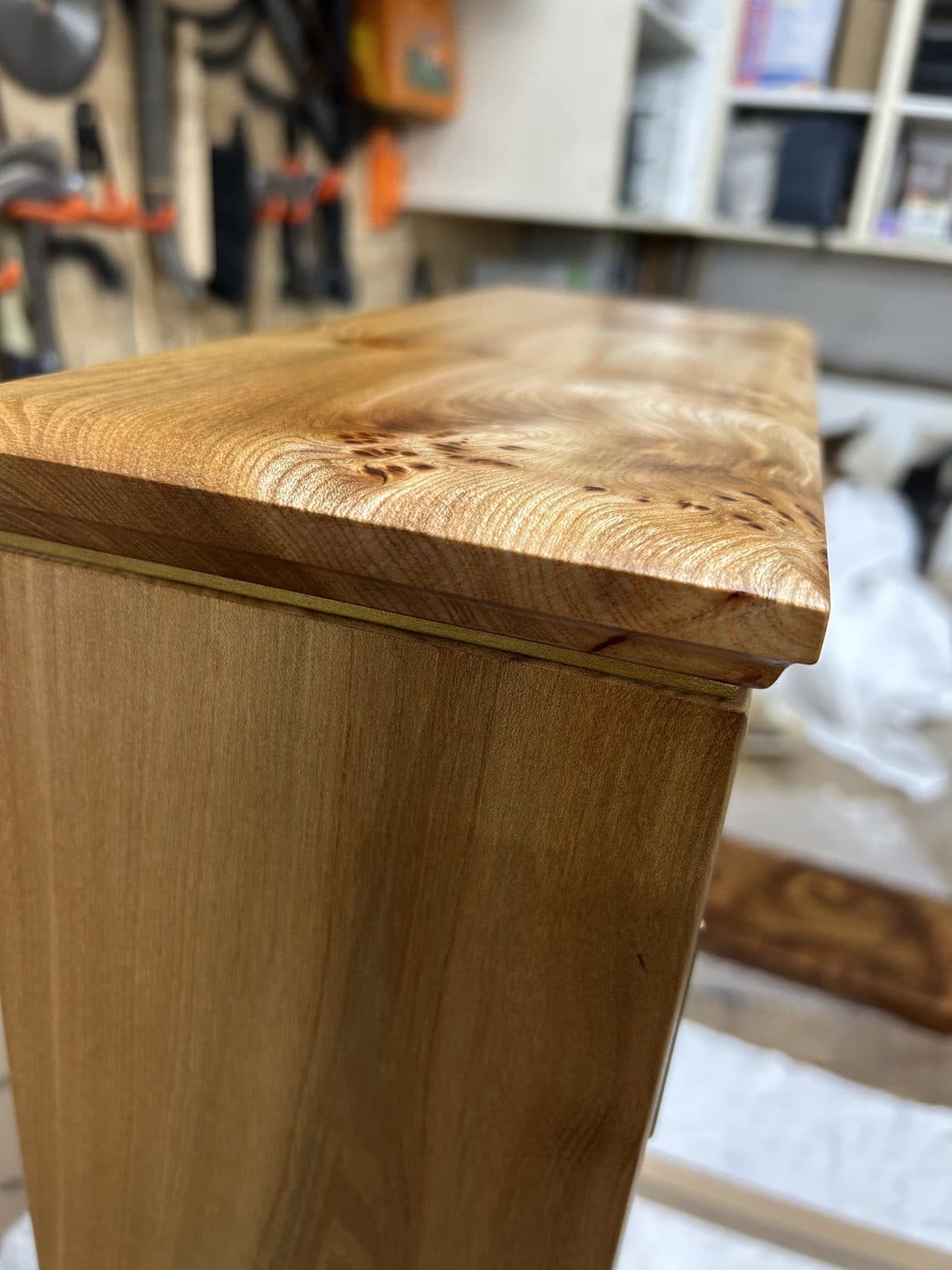
My solution was to dip back in time and use a timeless and elegant method, tambour doors. I put a soft D profile on each vertical strip, and the strips are then glued to canvas to form the two doors. This opened up more design opportunities, because the movement of the doors allows any shape. I designed flowing Art Nouveau whiplash curves, which soften the shape, create elegance and reflect the shapes formed by the grain of the elm.
Free, every fortnight
Get the next issue in your inbox
Technique, finished work, trade news and live jobs, for the bench and the studio.
Subscribe freeThe Scottish elm was brought alive by simple traditional skills: preparation, oil and lots of elbow grease.
The making: Tony Blacker, lead tradesman
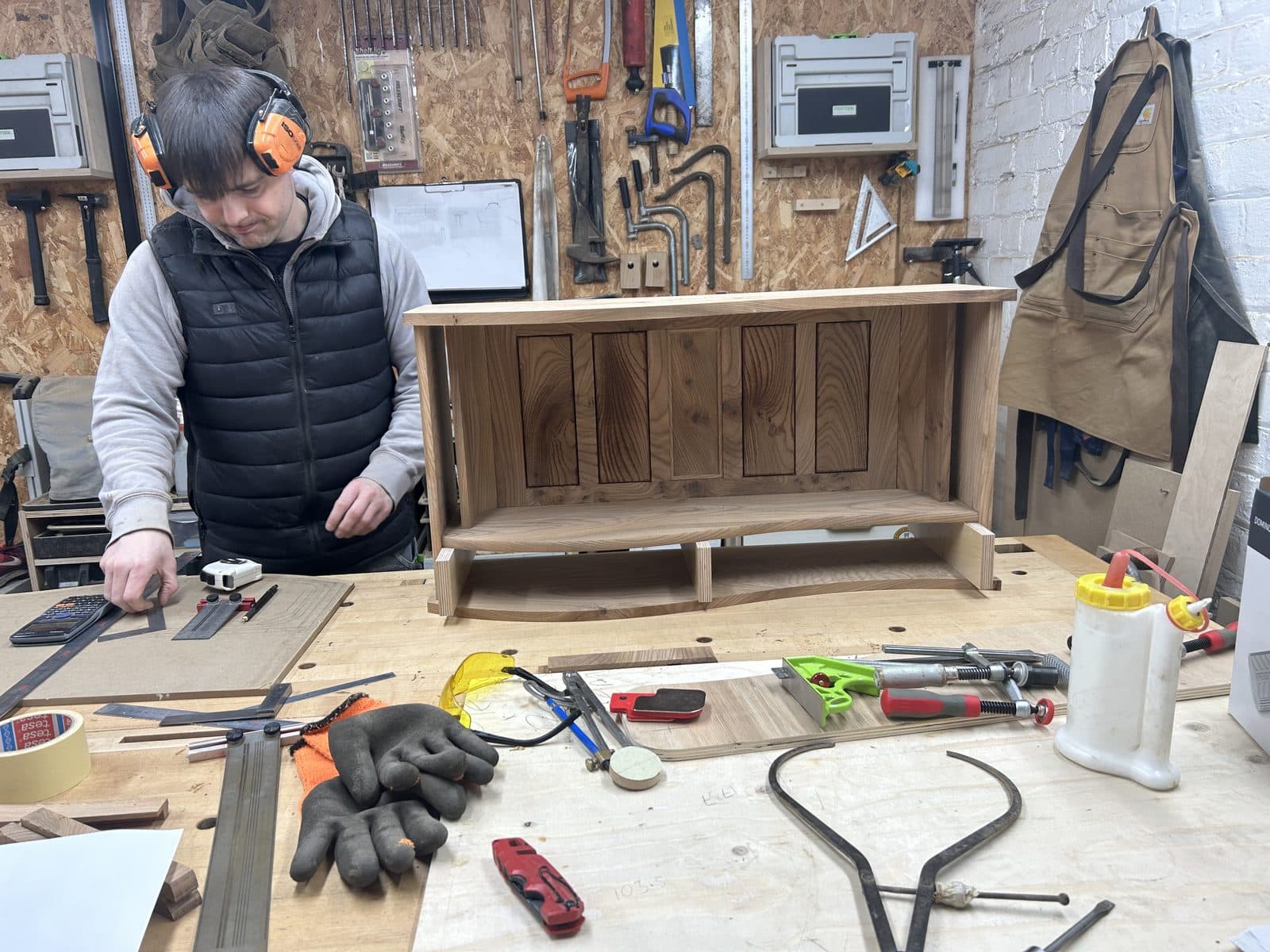
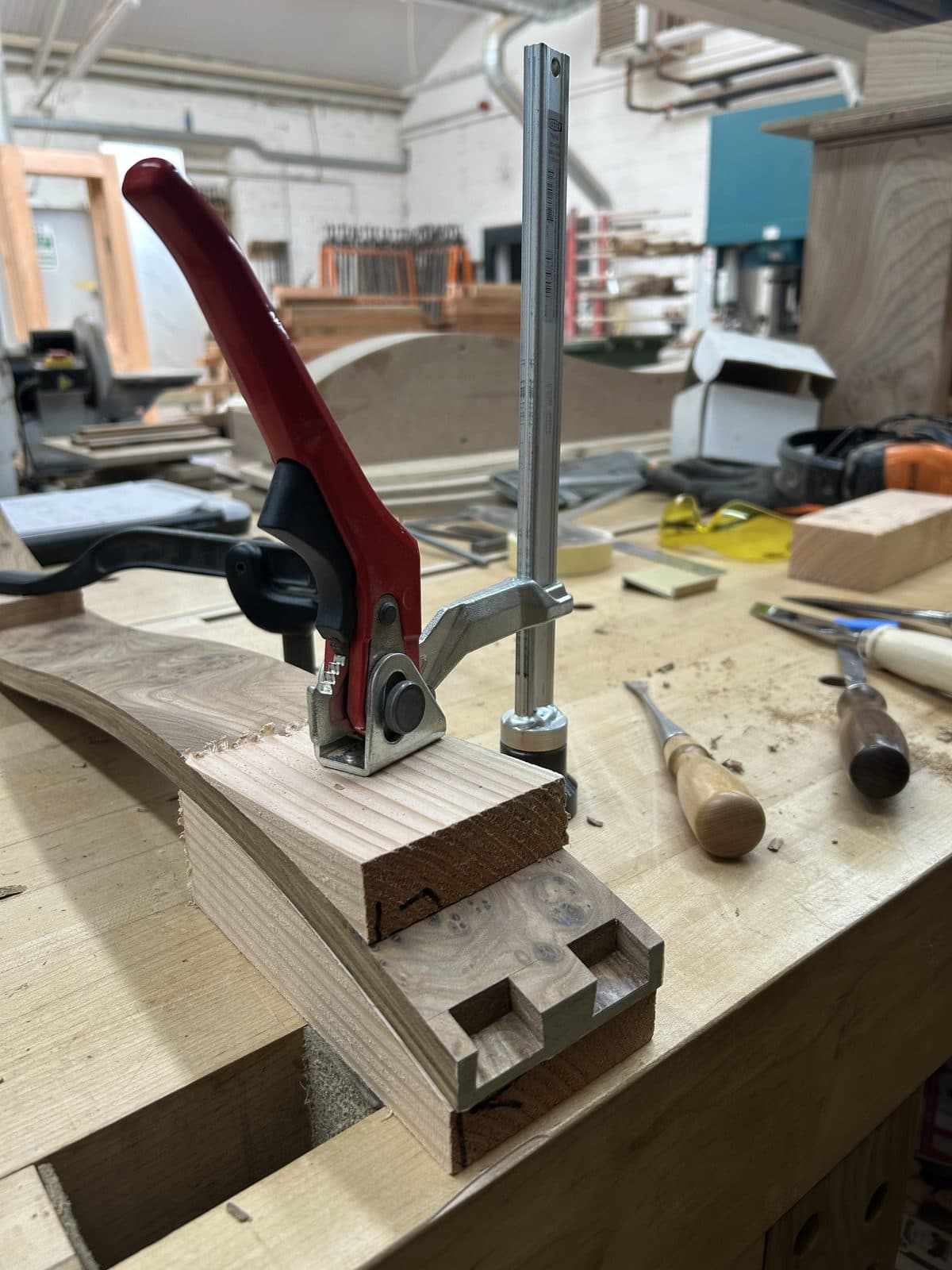
When I am issued a drawing with bespoke curves, it always takes the anxiety up a couple of notches. For this piece I had to make multiple templates with slightly different offsets of the same curve. Add to that the challenge of dovetailing a curved drawer, and traditional Shaker panelling for the case. It was mentally taxing, and my hand skills and hand tools also had to be on point. When I can bring the drawings to life, it makes my job extremely rewarding and lets me look forward to what comes next.
The maker
Paul Hodgkiss Designs has made furniture in Glasgow's Southside for 40 years, taking bespoke commissions alongside its kitchen and product ranges. A new showroom opens in early 2027.
Words by Paul Hodgkiss and Tony Blacker, edited for house style and approved by Paul Hodgkiss Designs on 22 October 2026. Photographs: Jean Paul Photography. Editorial; nothing was paid for this piece.
The Furniture Magazine
Every issue, free in your inbox
Technique, tools and materials, finished work worth studying, trade news and jobs — free to the bench and the studio.
Subscribe Free