On 15 October we asked on Instagram: what is the one thing your upholstery course did not teach you that your first job did? The question was for a piece for people finishing their training and looking for a first job in the trade. These are the answers, as posted, with emoji removed. Nothing has been reworded.
“That being a good upholsterer and running a good upholstery business are two different skills. My training taught me how to do the work. My first jobs taught me how much happens around the work: quoting, sourcing, client communication, collection and delivery, unexpected problems, and knowing when to stop and ask for approval. The chair is only part of the job.”
— @valeriehayesupholstery
“Speed. I learnt the skills with the AMUSF but bench time in a commercial setting taught me how to work smarter and faster”
— @ironwoodupholstery
“Professional upholsterers also really care but they do it faster. Pins don't exist, and not everything has to be done to perfection. Sounds contradictory but it makes sense in the real world.”
— @bestmadeupholstery
“Never turn work down however difficult. There's always a solution. That's when you really start to learn. Work relentlessly and get faster.”
— @lindseygreenupholstery
“Stripping old stitched stuffings for days on end, as to remember the sequences, the length of stitches, the diversity of them as well as their purpose. Also the very first thing I learn was to sweep the floor, it might sound mundane but in a Parisian workshop it’s paramount for the novice to understand the nature of the trade, it’s a clean trade. A floor should be always clean, like a tailors shop.”
— @brunopaulinlopez
“How long a job ‘should’ take when trading.”
— @bristol_upholstery_collective
“How much space is required for all the ‘ingredients’!”
— @bobbityhat
“That you don't know enough!!”
— @consciously_creative_now
Four answers come back to the same thing: speed, and knowing how long a job should take. The craft is taught on the course; the clock is learned at the bench.
Free, every fortnight
Get the next issue in your inbox
Technique, finished work, trade news and live jobs, for the bench and the studio.
Free, every fortnight. One click unsubscribes. See our privacy policy.
Who taught you? Two answers, and the chair one of them made
The question after that, on 17 October, was who taught you, and what stuck. Two of the answers, as posted.
“Oh my goodness there is so much but I suppose the biggest lesson I learned is...... It's ok to unpick something and try again. I'm always wanting to progress into the next stage, but in my first year of training @thomasevansupholstery, despite tantrums from myself, encouraged me to unpick my work and do it properly! To this day, when I need to undo my work, I still think of him, exasperated, but gently telling me to unpick and do it again!”
— @whitebarnupholstery, taught by Thomas Evans
“I still pull the thread to find my center line on hessian, N,S,E,W!”
— @foxandfurb, taught by Rachael South
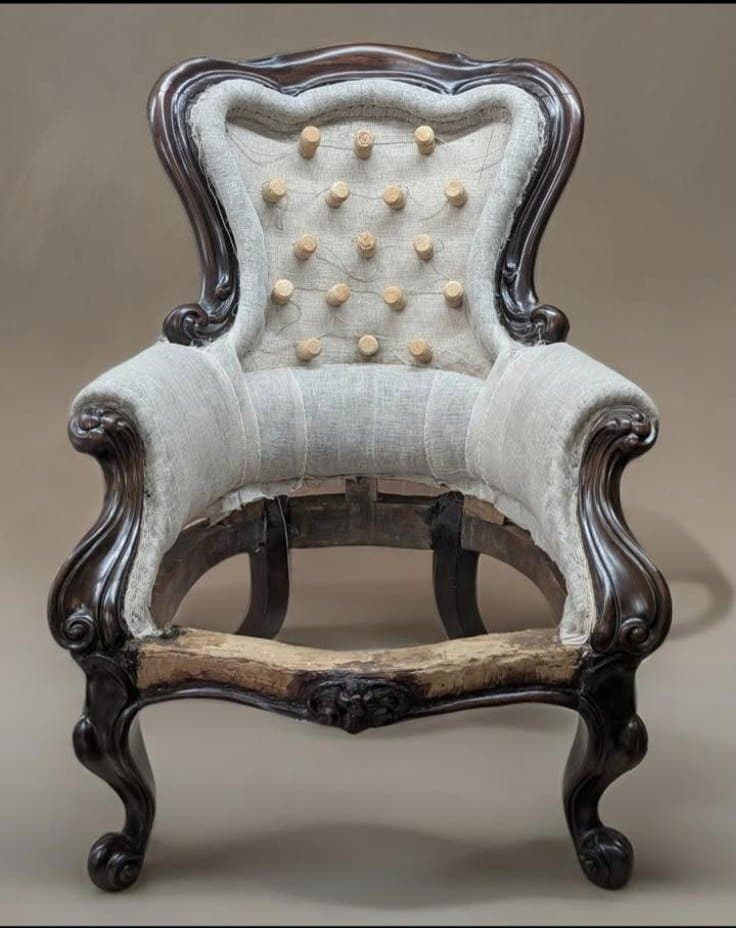
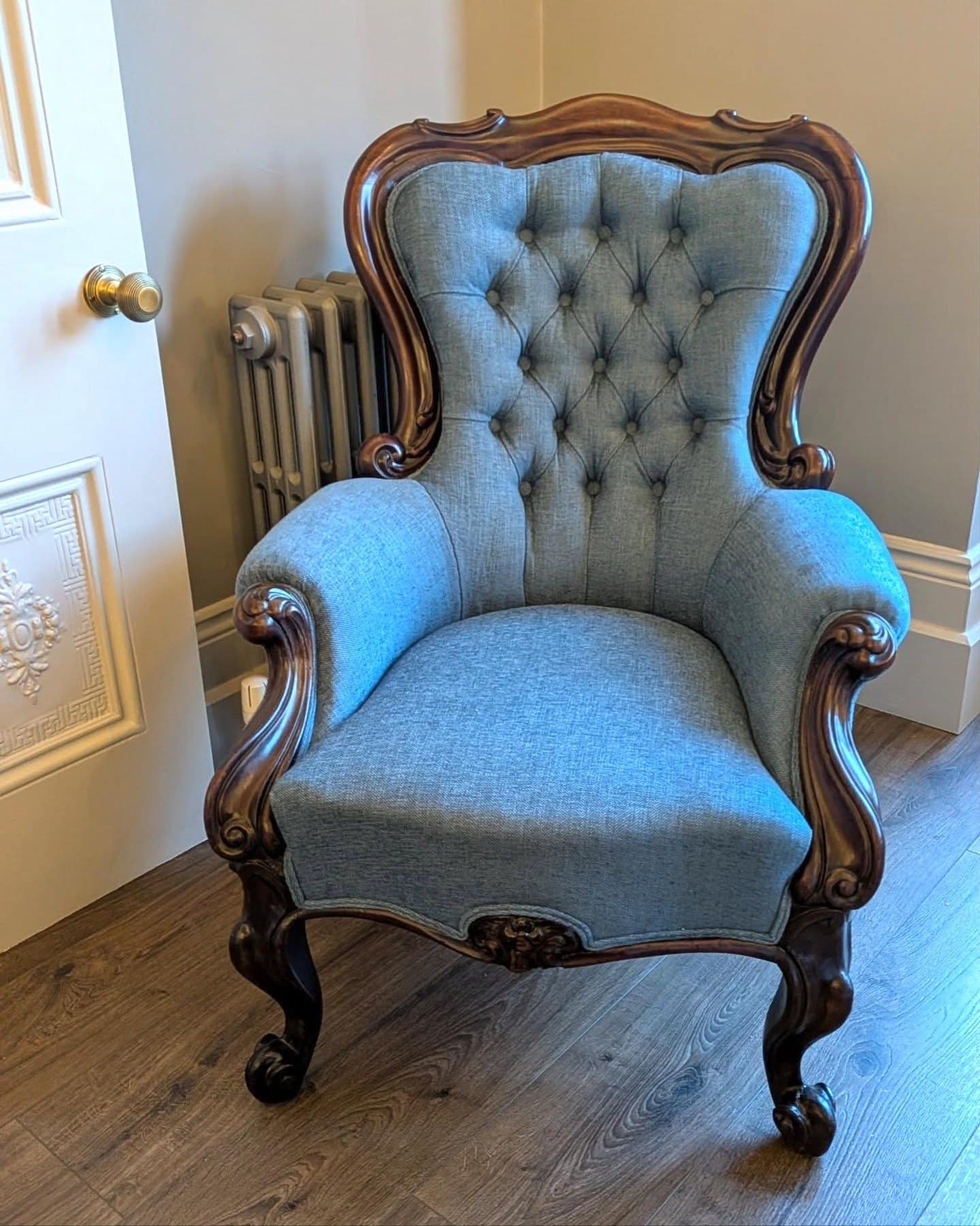
The lesson applied: Nadya Webster of White Barn Upholstery, Thornbury, Heritage Crafts Emerging Upholsterer of the Year 2025, rebuilt this Victorian chair from the frame up using traditional techniques for a customer in Bristol. Horsehair and linen scrim shape the back and arms; the seat has new springs under hand-stitched coconut coir and a layer of horsehair.
Thomas Evans Upholstery on Instagram
The next question is on our Instagram now: what is the first thing you check when a chair comes in?
The Furniture Magazine on Instagram
Answers posted as comments on The Furniture Magazine's Instagram posts of 15 and 17 October 2026, which said the best answers would run in the magazine with the author credited. Credited by Instagram handle as posted; emoji removed, nothing reworded. Chair photographs and consent from Nadya Webster, White Barn Upholstery, by Instagram message, 16 to 21 October 2026.
Know someone in the trade who should read this?
Send it to them. The magazine is free, and it grows one colleague at a time.
The Furniture Magazine
Every issue, free in your inbox
Technique, tools and materials, finished work worth studying, trade news and jobs — free to the bench and the studio.
Free, every fortnight. One click unsubscribes. See our privacy policy.