Contributed Q and A. Andrea Gnoato answered our questions in writing; the text was approved by Cyncly through Shelan Communications on 6 October 2026. Nothing was paid for this piece.
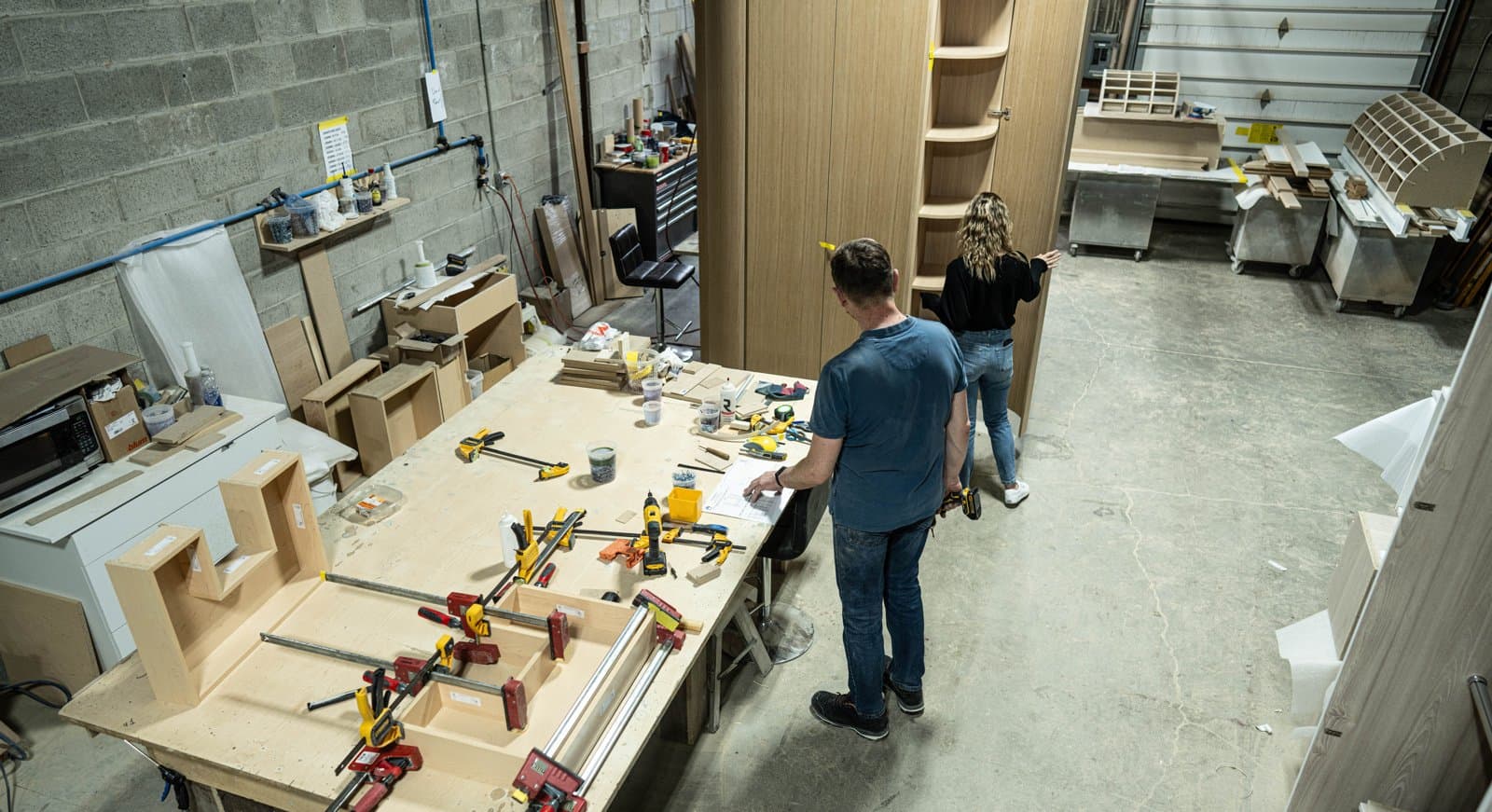
Andrea Gnoato leads Cyncly's Kitchen, Bathroom and Furniture business unit, which serves designers, retailers and manufacturers of all sizes. Cyncly's manufacturing customers range from two-person joinery workshops to industrial furniture producers.
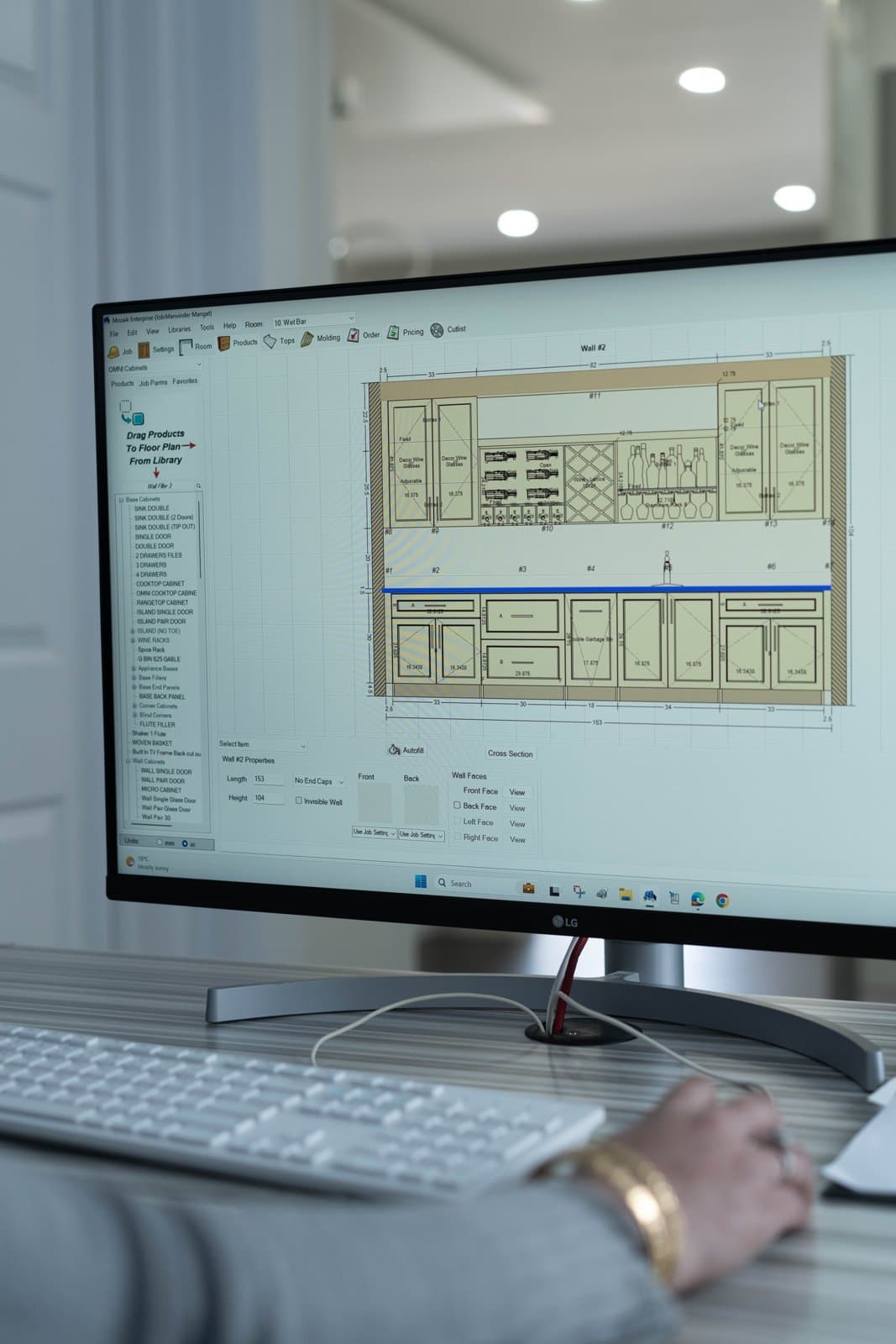
Cyncly's furniture manufacturing software includes Mozaik for small and mid-size cabinet and joinery workshops, imos for scaled and automated engineering, where design becomes machine-ready, and 3CAD and Insight for larger manufacturers to connect configuration and quoting to operations on the factory floor.
For a workshop of two to ten people, where does production software pay for itself first: design, quoting, cutting or the office?
Cutting. More specifically, the point where the design becomes the cut list.
I understand why many people would expect the answer to be design or quoting, because that is where the work is won. In a workshop of this size, though, the money is usually lost somewhere else. Workshops lose money when a cut list is wrong, when a job gets redrawn between the person who designed it and the person at the bench, or when a detail changes and the change does not carry all the way through. One remake can take the profit out of a whole job, and on a small job book you feel that immediately.
That's why, in our experience, the first return comes from removing the rebuild. When the cut list, the shop drawings, the hardware schedule and the labels all come from the same file as the design, you can eliminate one of the most common and most expensive errors.
Quoting is a close second, and it is a different kind of gain. In a traditional setup, quotes can depend on the experience of the person configuring the project. But when workshops configure pricing from the real materials and hardware in the job rather than personal judgement, you can reduce margin leaks and execute to plan more effectively.
The office comes last. Admin time is real, but it is rarely what is costing a small workshop its margin.
What does it realistically take, in cost and time, to move a small workshop from paper or basic drawing tools to CAD/CAM, and what do people underestimate?
It costs less money than most people expect, but more of their own time as they adapt their way of working.
On cost, I can be specific. Mozaik is sold as a monthly subscription with no large upfront payment. In the UK, we have three tiers: Mozaik Manufacturing is £95 per month for a workshop cutting on a table saw or panel saw, Mozaik CNC is £195 per month, and Mozaik Enterprise is £295 per month for multi-machine operations. Additional seats are £60 per month, licensed per device. A workshop starts on a 90-day paid trial with full access, which converts to a twelve-month subscription only if they decide to carry on. There is no large upfront commitment to find out whether it suits you.
In terms of time, a workshop can be designing and producing jobs within days rather than weeks. New customers get an onboarding session included, and workshops on the CNC tier get a post processor and integration support to get their router cutting.
What people tend to underestimate is the change in thinking. Before the software can build your jobs your way, someone has to decide what "your way" is: which construction methods you use, which hardware you standardise on, what your materials cost, and how your standard products look. Most workshops have never written that down because the information lives in the owner's head.
That library work is the real project, and it is worth doing properly. It is also the part that pays off for years, because once your methods are in the system, every job is built to your standard regardless of who in your shop is building it.
What does Cyncly's acquisition of imos mean in practice for a UK cabinet maker or furniture manufacturer?
In the short term, very little changes, and that is deliberate. There are no immediate changes to products, contracts or support for anyone, on either side. What it means over time depends on the size of the business.
imos is headquartered in Herford, in the German furniture manufacturing region, and specialises in what I would call the engineering middle: the step where a finished design becomes machine-ready. It turns design intent into validated production data, including accurate cut lists, optimised nesting and CNC-ready output for panel-based custom and semi-custom furniture. It serves more than 5,000 manufacturers across 100 countries, from craft businesses through to large industrial producers.
That middle step is where manufacturers lose the most time and accuracy, and it is the reason we wanted to bring imos into Cyncly. We had worked closely with them for years and already shared an integration, so this builds on something real rather than starting from nothing.
For a two-to-ten-person cabinet-making workshop, the practical answer today is that Mozaik remains the product built for you, and it continues to be developed. What the acquisition changes is the road ahead of you. If you grow into a manufacturer with a sales network, multiple machines or multiple sites, Cyncly offers a path to help you through the engineering middle and into full production management.
Free, every fortnight
Get the next issue in your inbox
Technique, finished work, trade news and live jobs, for the bench and the studio.
Subscribe freeFor a mid-market UK furniture manufacturer, it means the CAD/CAM capability you may already know is now backed by a larger research and development capability and a global support network.
Bringing portfolios together properly takes time, and we will be sharing information with customers before anything changes.
How does the software connect to the machinery a small workshop already has, and what happens when those machines are older?
Software connects to the machinery through post processors, which are the translation layer between the design software and a particular machine and controller.
Mozaik CNC includes free stock post processors for more than 175 CNC machine brands, covering machines from makers including Biesse, VWM, Felder, ManTech, SCM and Fabertec. For most workshops that means connecting the router they already own without paying for custom development or waiting on it. CNC customers also get integration support to get the machine set up and cutting.
On older machines, age matters less than the controller. If the machine accepts standard G-code, it can usually be driven without much difficulty, and plenty of older routers do. Where it gets more involved is a proprietary controller, or a machine old enough that its post processor is not in the standard set. That is solvable, but it is worth checking before you buy rather than after.
It is also worth saying that a CNC is not a prerequisite. Many small workshops cut on a table saw or panel saw, and they get most of the same benefit: the same accurate cut lists, shop drawings, pricing and labels, with sheet layouts optimised to reduce offcut waste. Cut lists also export to the leading linear and beam-saw optimisers.
The principle I would apply is simple: software should fit the workshop you have, not require you to re-equip.
What mistakes do you see when a small workshop adopts production software for the first time?
Five come up repeatedly.
- Buying for the workshop they hope to have. People pay for capability they will not use for several years. We recommend shops buy for how they cut today because moving up a tier later is straightforward.
- Trying to perfect the library before doing any real work. Workshops spend weeks building product libraries in the abstract and lose momentum. Put a live job through early, even a simple one. You learn more from running a few real jobs than from a month of setup.
- Leaving it with one person. If only the owner can drive it, you have recreated the original problem in a new place. Knowledge stuck in one person's head is still stuck, whether it is on paper or on screen.
- Running the old process alongside the new one. Two sources of truth can be worse than one imperfect or evolving one. It's best to pick a date and move.
- Skipping the onboarding, then judging the software on a self-taught setup. This is the most avoidable one. Support and training exist, they are included, and the people on the other end have worked in the trade. A workshop that spends a couple of hours getting its construction methods and hardware set up correctly at the start will not spend the next six months working around a configuration that was never right.
Underneath all five is the same point: the software is not the change. The change is agreeing how your workshop builds things, and then holding to that standard.
What is coming in the next two or three years that a small maker should be planning for now?
I want to answer this carefully and with humility because the technology landscape can change quickly.
I'll start by saying that Cyncly is investing in AI-powered workflows that help our customers do more. AI helps most where work is high-volume, manual and checkable against rules. Capabilities include validating an order or a set of variants before it reaches production, pulling data out of documents so nobody re-keys it, and catching the inconsistency in a job that a tired person might miss toward the end of a work day. Those are real gains and they are arriving now.
There are other problems that are already well solved: cutting faster, nesting tighter and sequencing work better are constrained problems with defined rules, not reasoning problems. They are solved by good optimisation and good machinery, and anyone telling a small maker that AI will speed up their router is overselling.
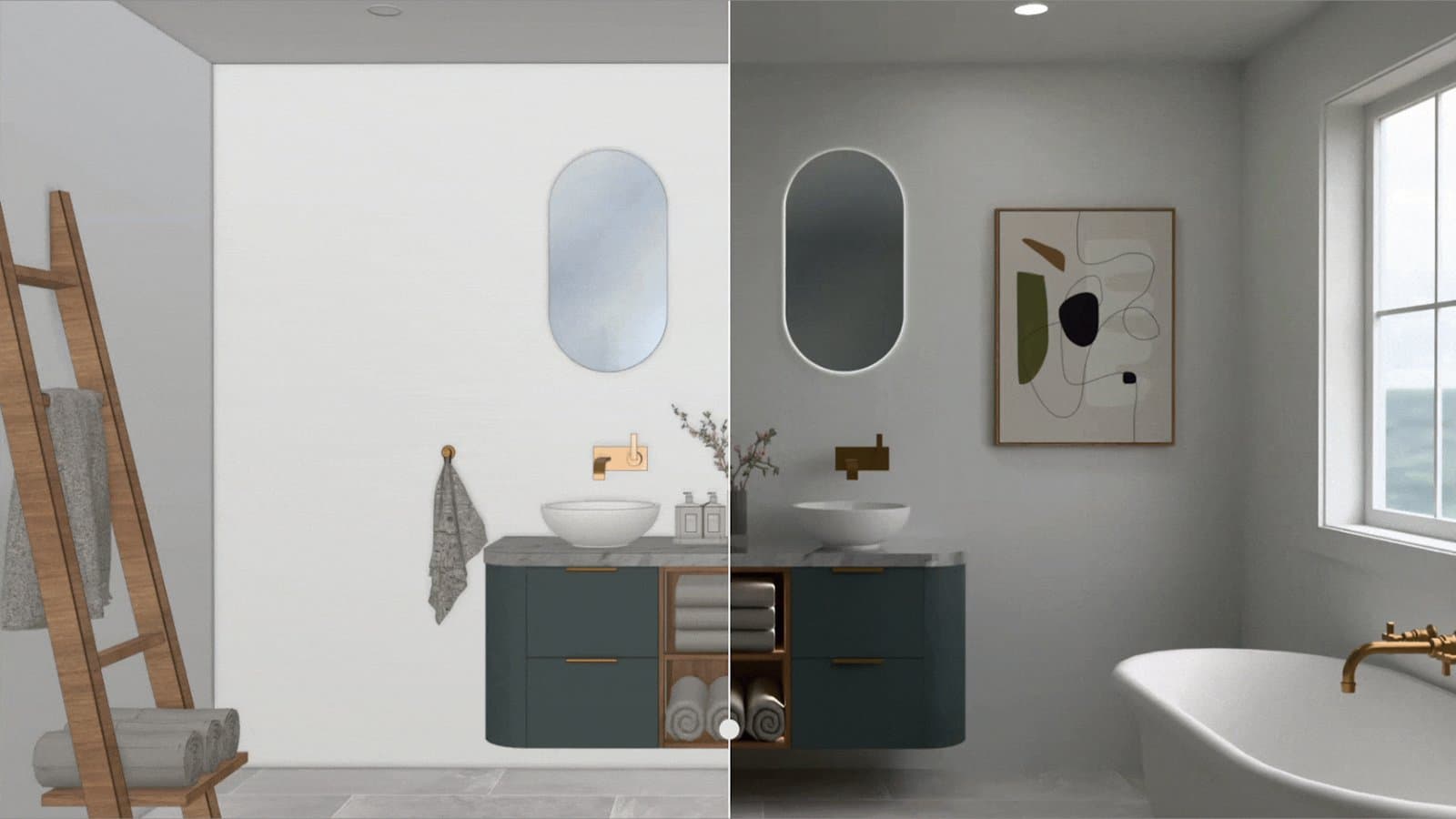
Presentation is one place new technology is making an impact for small workshops. Mozaik version 15 includes an AI rendering option that produces photorealistic room visuals from the actual project, keeping the real geometry and materials, without a separate rendering package or a specialist. For a workshop trying to win higher-end work, being able to show a client the finished room is worth more than most feature lists. And it's important to us that the render is based on real product data so that the image is not only beautiful but buildable.
With all that said, makers can plan for the future by getting the foundations right now. Everything coming next depends on having the right structure: standardised construction methods, accurate material and hardware data, and one file per job that carries from design through to the machine. Automation of any kind, AI included, is only as good as the structure underneath it, and a workshop with clean data will be in the best position to take advantage of innovation when it arrives.
The other thing I would plan for is customer expectation. Buyers increasingly expect to see the finished room, get a firm price quickly, and be told a delivery date that holds. That is what accurate, connected data makes possible.
What separates the small workshops that grow from the ones that stay the same size?
The biggest characteristic we see in thriving workshops is that they write things down.
Documentation sounds unglamorous, but it is the pattern. In a workshop that stays the same size, the standard is in the owner's head. Every job depends on them being available, and the business cannot get bigger than one person's attention. In a workshop that grows, the standard is in the system: the construction method, the hardware, the pricing, the way a drawer box is made. New people become useful faster because the knowledge is in the process rather than in the person.
That is what production software offers a business of this size. We're here to help workshops make the way they build repeatable, so the quality of a job does not depend on who is on shift.
Answers supplied in writing by Andrea Gnoato, General Manager, Kitchen, Bathroom and Furniture solutions, Cyncly, via Shelan Communications, 30 September 2026; final text approved 6 October 2026. Prices are as stated by Cyncly for the UK at that date. Photographs supplied by Cyncly with captions.
The Furniture Magazine
Every issue, free in your inbox
Technique, tools and materials, finished work worth studying, trade news and jobs — free to the bench and the studio.
Subscribe Free