In brief
- 17 October is International Repair Day. We Are Repairs, a UK directory of professional repairers, is marking it with an open letter to the Prime Minister and a change.org petition called Repair Matters.
- The letter asks for three things: repair written into Net Zero and environmental strategy with funding to match, the carbon saved by repair measured and reported, and a stronger Right to Repair.
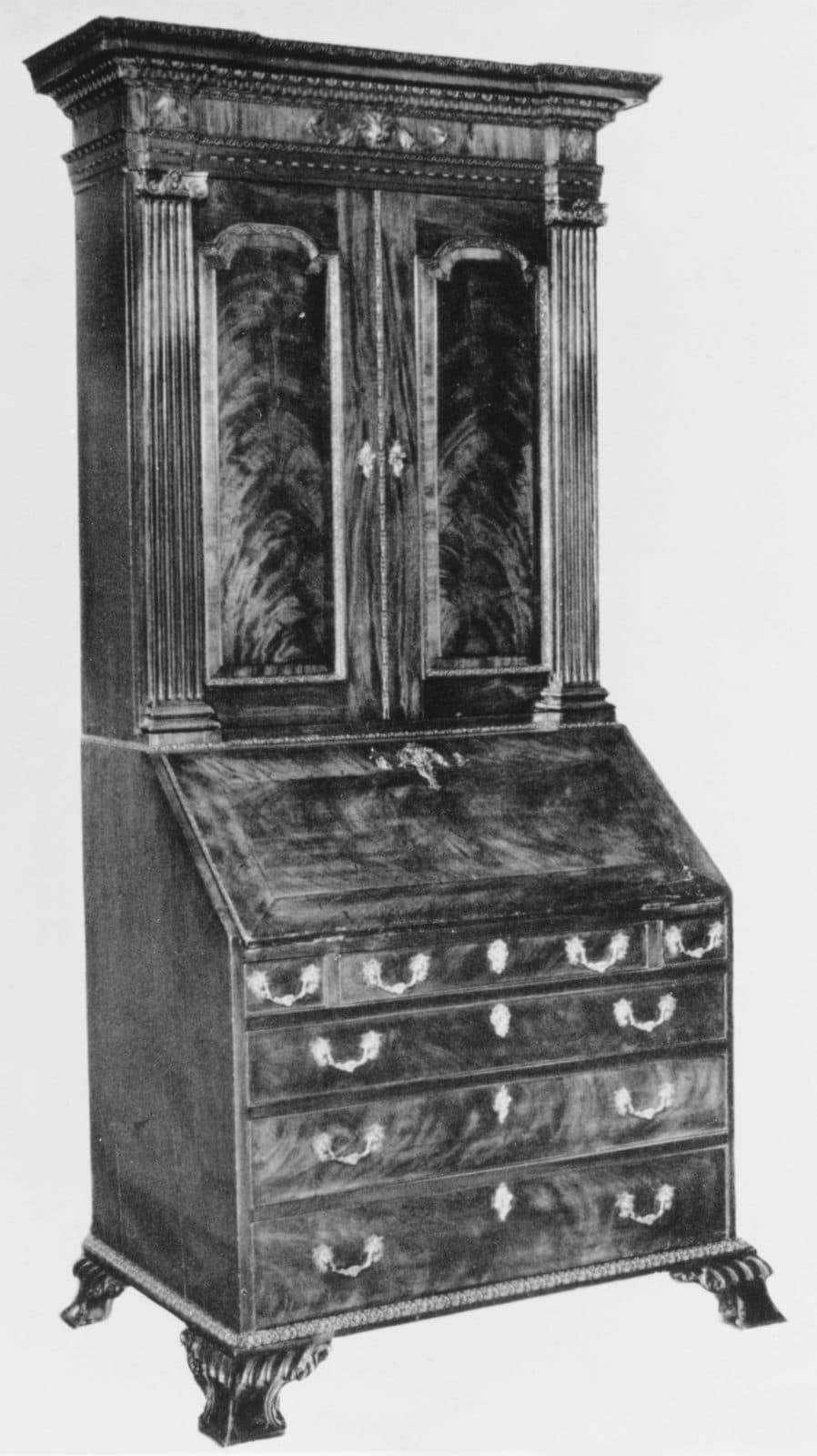
- It names upholsterers, furniture restorers and chair caners among the trades it speaks for.
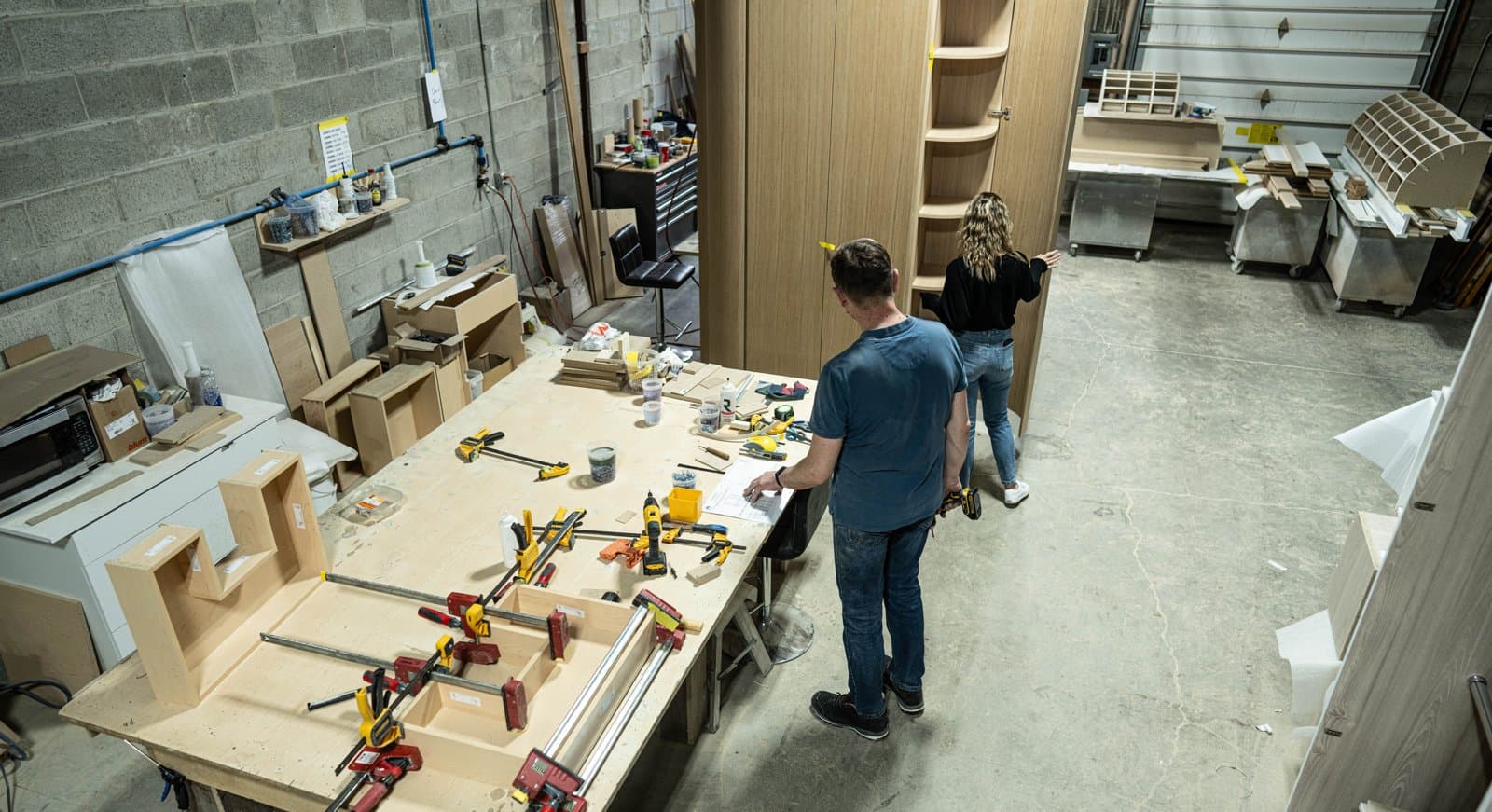
- Alongside it, a survey of 109 upholsterers at the Festival of Upholstery found they kept 3,524 pieces of furniture in use in a year, and 83 percent have capacity for more work.
- The petition is at change.org/RepairMatters. The letter is linked from it.
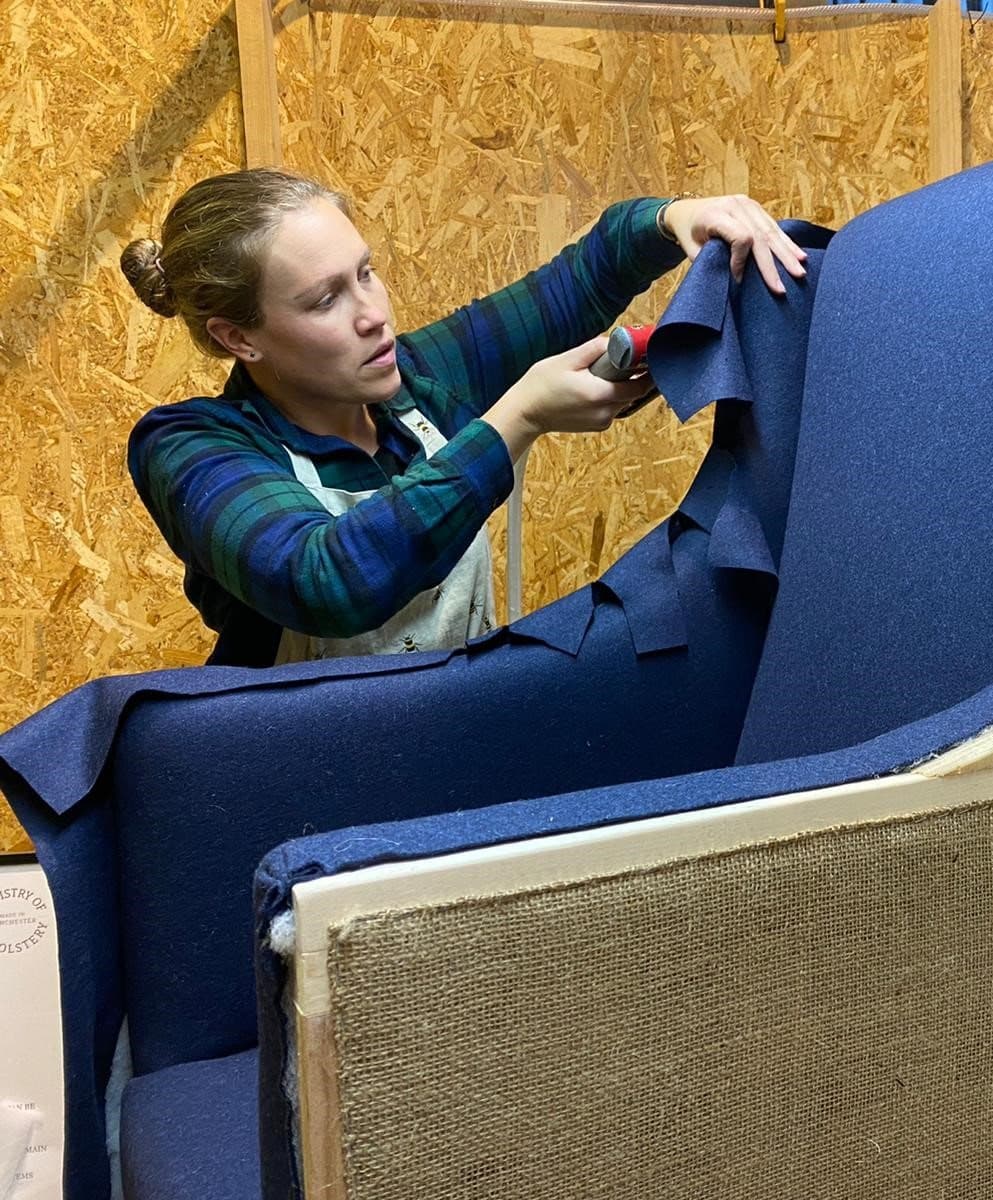
Every upholsterer who has rebuilt a sprung seat, every restorer who has let a new piece of timber into a broken leg, every polisher who has brought a table back, is in the repair economy. It is most of what this trade does. It is also, the letter argues, almost invisible in national policy.
The letter is signed by Ally Booker and Gemma Broad, co-founders of We Are Repairs, a directory that lists independent repairers across the UK, furniture among them. It is dated 17 October 2026, International Repair Day, and addressed to the Prime Minister. It is written, it says, on behalf of the thousands of independent repair businesses, skilled craftspeople, heritage craft bodies, community repair groups and volunteers who keep things in use.

What it asks for
Three things, in the letter's own order.
- Set the strategy and secure funding. Embed reuse, repair and product life extension in the UK's Net Zero and environmental strategies; publish the Circular Economy Strategy; give mayors and councils the powers and resources to put repair businesses, repair cafes and skills workshops into local growth plans; and match the 1.4 billion pounds allocated to recycling with investment in repair, including green funding that micro and small repair businesses can reach, not only charities.
- Measure repair and reuse. Count the emissions of imported goods so that a product made or repaired here can be compared fairly with one shipped in, and measure and report the carbon saved by repair and by keeping products in use longer.
- Legislate. Strengthen Right to Repair so that products are designed to be repaired, and independent repairers have fair access to parts, tools and repair information.
The closing paragraph is the one for this trade. It invites the Prime Minister to work alongside Britain's thousands of upholsterers, tailors, sewists, cobblers, jewellery repairers, electronics technicians, bicycle mechanics, furniture restorers, bookbinders, chair caners, visible menders and clockmakers.
What 109 upholsterers told them
The part of the campaign that belongs to this trade is a survey We Are Repairs ran at the Festival of Upholstery in Birmingham on 2 and 3 October, which it calls the Great British Upholstery Survey 2026. It asked 109 independent upholsterers about the last twelve months. Between them they represented 843 years of experience, and they said they had extended the life of 3,524 pieces of furniture in the year.
3,524
pieces of furniture kept in use in twelve months by 109 upholsterers, which the survey puts at 88.1 tonnes of furniture and 105.7 tonnes of CO2e, each piece given about another 30 years.
Source: We Are Repairs, Great British Upholstery Survey 2026, collated 7 October 2026
The tonnage figures rest on two assumptions the survey states: an average piece weighed as an armchair at 25 kilograms, from a Furniture Re-use Network document, and an average saving of 30 kilograms of CO2e per piece, from FIRA's 2011 study benchmarking the carbon footprint of furniture. The sample is self-reported and taken at one event. Read it as a glimpse, which is how the campaign describes it, not a national estimate.
Three other answers are worth a workshop's attention. Ninety-one percent said more than half of their work is on furniture built before 2000, and 34 of the 109 said all of it is. They estimated that 72 percent of the pieces would otherwise have been replaced or thrown away. And 83 percent said they have capacity to take on more work, 41 of them significantly more. That last figure is the one for anyone who thinks the trade is full.
“Our survey of these 109 upholsterers has given us an exciting glimpse of the benefits that repair is already achieving every day, so why is the climate and economic value of that work largely invisible? We cannot continue measuring only the emissions we produce while overlooking the emissions we avoid.”
— Gemma Broad, co-founder, We Are Repairs, in the campaign's press release
Free, every fortnight
Get the next issue in your inbox
Technique, finished work, trade news and live jobs, for the bench and the studio.
Subscribe free“The repair economy already exists. Britain already has the businesses, skills, community groups and public support needed to make repair a much bigger part of the circular economy. What is missing is recognition and support at a national level.”
— Ally Booker, co-founder, We Are Repairs, in the campaign's press release
The numbers it stands on
74,200
skilled jobs if every UK household repaired or reused two more items a year, with 23 million more items kept in use and more than 1.6 billion pounds for local economies.
Source: SUEZ, Re-use and repair manifesto, January 2025, page 9
That figure comes from SUEZ, the waste and recycling company, whose January 2025 manifesto also found that about 35,500 reusable or repairable items pass through household waste recycling centres across the UK every day. The letter cites it, and so do we, because the manifesto is published and the page is there to read.
The campaign also says 60,000 pieces of furniture are discarded in the UK every day. We asked where that came from. It is a 2018 North London Waste Authority survey by Censuswide of 2,020 UK adults, which estimated that nearly 22 million small items of furniture were thrown away damaged in a year; divided by 365 that is about 60,000 a day. It is a survey extrapolation and it is eight years old, so we print it as that. The letter also cites Green Alliance polling from 2025 that 83 percent of the British public agree throwaway culture is a big problem, the Carbon Trust on the share of a smartphone's emissions that come from manufacture, and the Restart Project's Repair and Reuse Declaration, which it says 160 cross-party MPs and 551 organisations have signed. Those are the campaign's citations; we have not yet checked each one against its source and we say so.
For furniture specifically, the best figure we hold is our own, from the Office for National Statistics: 48 percent of the UK's upholsterers work for themselves, about 6,100 of 12,800 in work. Most repair in this trade is done by sole traders and workshops of two or three. A policy that funds repair only through charities and community groups, which is one of the letter's complaints, misses almost all of them.
What it would mean at the bench
Strip the policy language away and the letter asks for three things a workshop would notice. Access to grants and skills funding that currently stop at the charity door. A measure of the carbon a repair saves, which is the number a workshop could one day put on an invoice or a tender. And parts, tools and information: a modern sofa mechanism, a specialist fitting, a finish, obtainable by the repairer rather than only by the manufacturer.
None of that is in law today. The letter is a request, not a result, and a petition is where it starts. What it does do is put the words upholsterer and furniture restorer in front of a government that is more used to hearing from recyclers.
What to do, if you want to
- Read the letter. It is three pages, linked from the petition page.
- Sign the petition at change.org/RepairMatters if you agree with it.
- Tell us what repair funding or Right to Repair would change in your workshop. Answers in the comments on our Instagram post, or to editor@thefurnituremagazine.com, go into our coverage of the campaign in the late October issue, credited to you.
Sign the petition on change.org
Read the open letter (PDF, three pages)
We will report what happens next: the signature count, any response from government, and what the trade bodies say. We have asked Ally Booker and Gemma Broad for a Q and A on why they built a directory for repairers and what the first weeks of the campaign show, for the late October issue.
The Furniture Magazine reports this campaign because it concerns the people we write for. The arguments in it are the campaign's; the facts we repeat are the ones we could check, and we have said which we could not.
Sources
- Repair Matters petition, change.org, read 16 October 2026
- Open letter to the Prime Minister, We Are Repairs, 17 October 2026 (PDF linked from the petition)
- We Are Repairs, Great British Upholstery Survey 2026 results (press pack PDF, read 16 October 2026)
- We Are Repairs, Repair Matters press release (press pack PDF, read 16 October 2026)
- North London Waste Authority, 22 million damaged furniture items and 11,000 bust bicycles thrown away each year, 8 October 2018
- SUEZ, Re-use and repair manifesto: how to accelerate progress to a circular economy, January 2025
- SUEZ, Powering up the circular economy with repair and re-use, 25 March 2025
- International Repair Day, 17 October 2026
- We Are Repairs
- The Furniture Magazine, Nearly half of the UK's upholsterers work for themselves (ONS Annual Population Survey)
The Furniture Magazine
Every issue, free in your inbox
Technique, tools and materials, finished work worth studying, trade news and jobs — free to the bench and the studio.
Subscribe Free